Trailer Safety Chain Laws Australia: Do You Really Need Two Chains?
If you’ve ever spent five minutes at an Australian boat ramp or a busy caravan park, you’ve probably heard the "experts" debating trailer setup. One bloke reckons you only need one chain if you’re under three tonnes; another insists two chains are mandatory for everything bigger than a box trailer.
The reality is that trailer safety chain laws in Australia aren't a matter of opinion, they are strictly regulated safety requirements. Get it wrong, and you’re looking at more than just a hefty fine; you’re risking a catastrophic "runaway trailer" scenario and potentially voiding your insurance.
At Snap-D Australia, we live and breathe towing compliance. So, let’s clear up the confusion once and for all. Do you really need two chains? What are the AS 2741 shackle requirements? And how do you make sure your setup is 100% legal before you hit the highway?
The Golden Rule: The 2.5T Threshold
In Australia, the number of safety chains you need is determined by your trailer’s Aggregate Trailer Mass (ATM). ATM is the total weight of the trailer plus its full load (water, fuel, gear, and the trailer itself) when it is not hitched to a vehicle.
Here is how the law breaks down:
- Trailers up to 2,500kg (2.5 Tonnes) ATM: You are legally required to have at least one safety chain.
- Trailers over 2,500kg and up to 3,500kg ATM: You are legally required to have two safety chains.
- Trailers over 3,500kg ATM: These must have two safety chains of a specific structural grade (usually 800 MPa breaking stress) or a breakaway system, depending on the specific state regulations and ADRs (Australian Design Rules).
For most Aussie caravanners and boaties, that 2.5T mark is the magic number. If your rig is a tandem axle or a large single axle with a heavy load, chances are you’re over 2.5T and legally need those two chains.
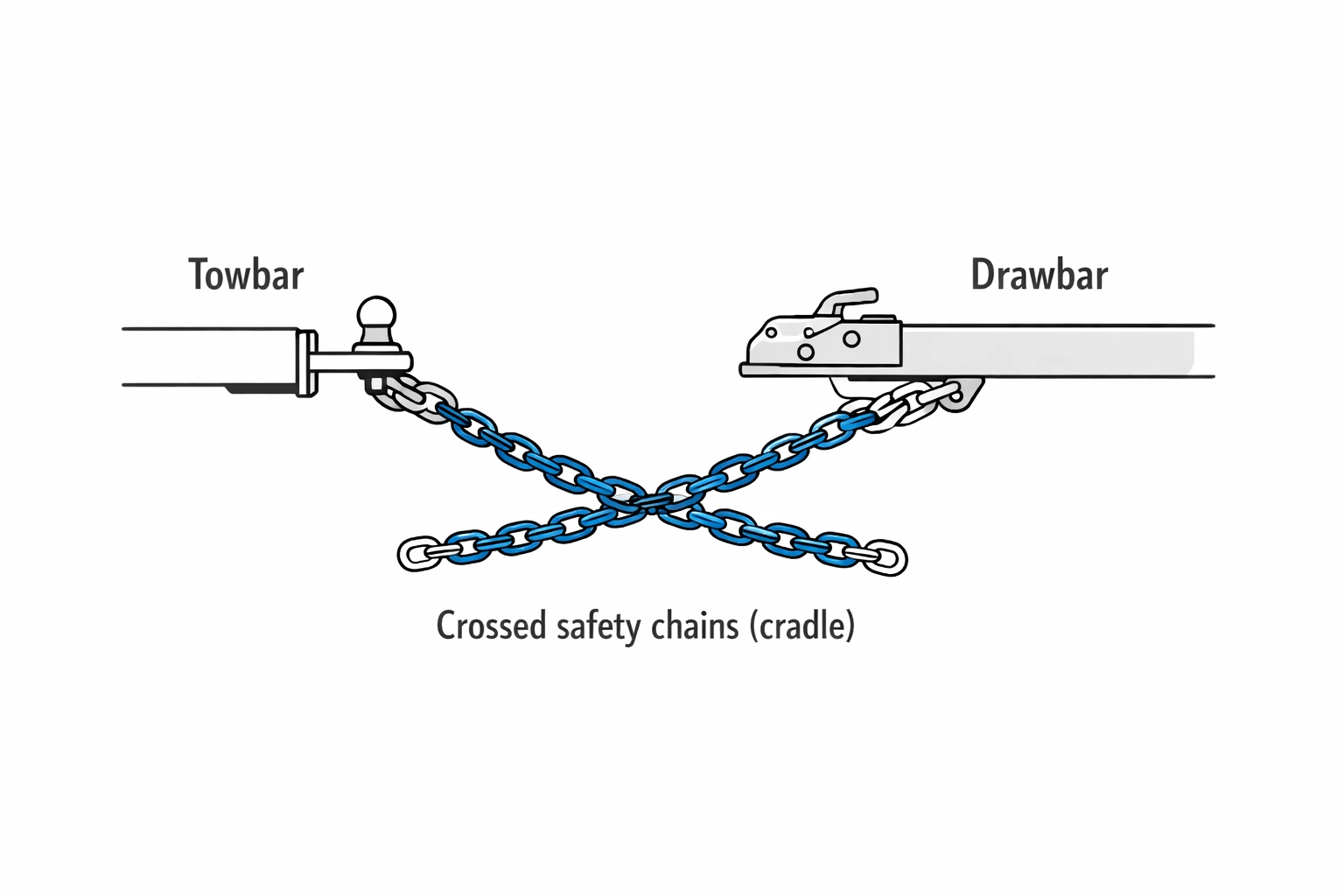
Why Two Chains? The "Cradle" Effect
It isn't just about doubling the strength. When you use two safety chains, the law requires you to cross them under the drawbar.
Why? Because if your hitch or tow ball fails, the crossed chains act as a "cradle." They catch the drawbar before it hits the tarmac, preventing it from digging into the road and flipping the trailer or causing it to spear into oncoming traffic. If you only have one chain on a heavy trailer, the drawbar is much more likely to drop straight down, leading to a much nastier outcome.
The Weak Link: Your Shackles
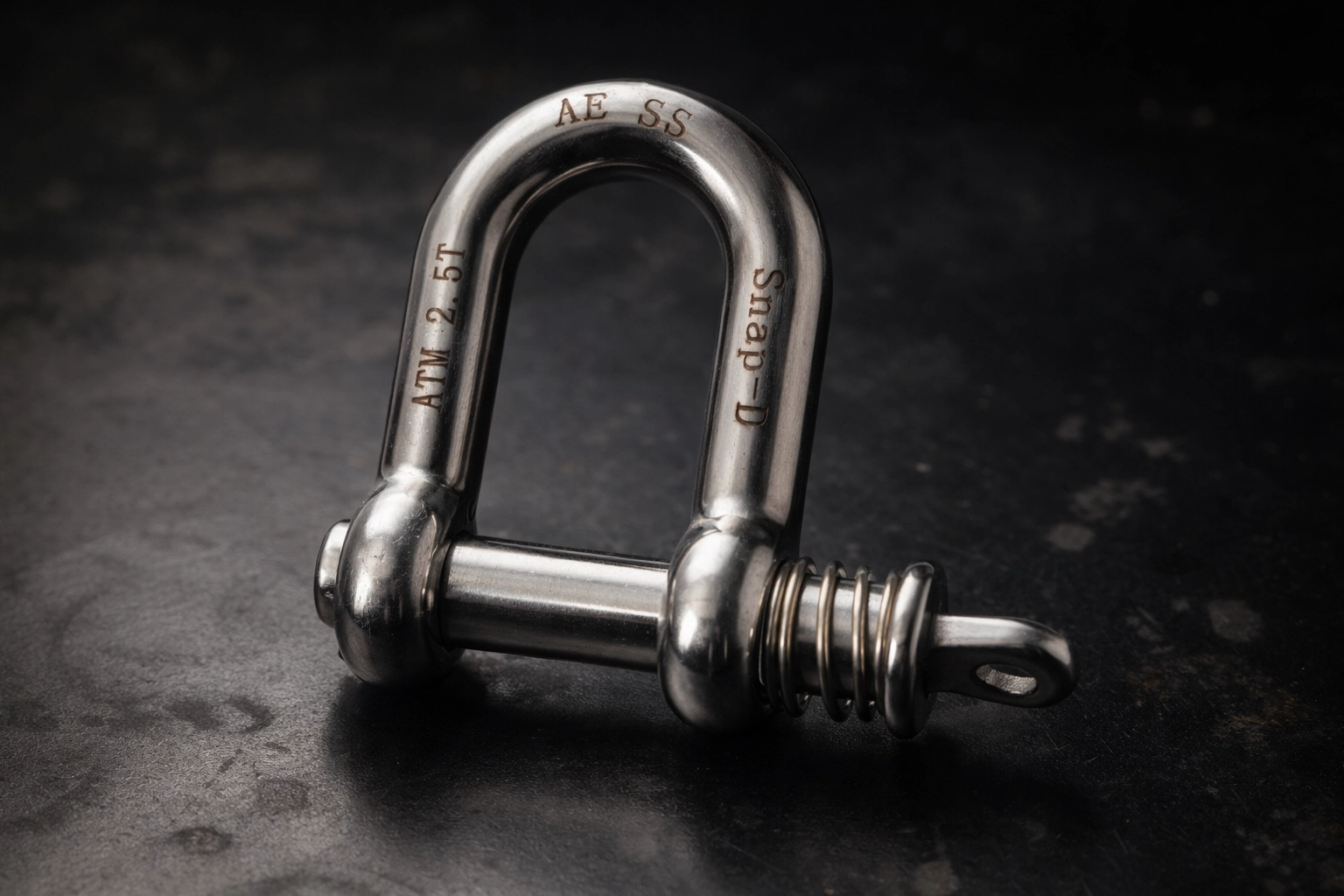
You can have the strongest safety chains in the world, but if you’re using a cheap, unrated shackle from a bargain bin, your setup is illegal and unsafe. This is where many people get caught out during roadside inspections.
To be a legal shackle in Australia, it must meet specific criteria. Under AS 2741 shackle requirements, a rated shackle should be permanently marked by the manufacturer so it’s clearly identifiable and correctly rated for the job.
As a practical guide, you want to see:
- The Manufacturer’s Mark (So we know who made it).
- A clear rating/limit marking that matches the intended use.
A quick note on lifting marks vs towing marks
You’ll often hear people say a towing shackle “must be stamped S or 6” or carry a WLL marking. That’s where people mix up lifting gear rules with towing rules.
- WLL (Working Load Limit) is a lifting term used for cranes, rigging, and overhead loads.
- For towing in Australia, the key reference is your trailer’s ATM (Aggregate Trailer Mass).
That means the practical question for towing is simple: is each shackle rated for the full ATM of the trailer?
Snap-D shackles are stamped with their ATM rating for towing, so you can match the shackle directly to your trailer’s ATM. They are made from 304 stainless steel and specifically tow-rated for these applications, even though they do not carry a lifting-style “Grade S” mark.
So no, a shackle does not need a WLL marking to be legal for towing. What matters is that it is a properly rated towing shackle suited to the trailer’s full ATM.
The Full Rating Rule: Each Shackle Must Match the Trailer ATM
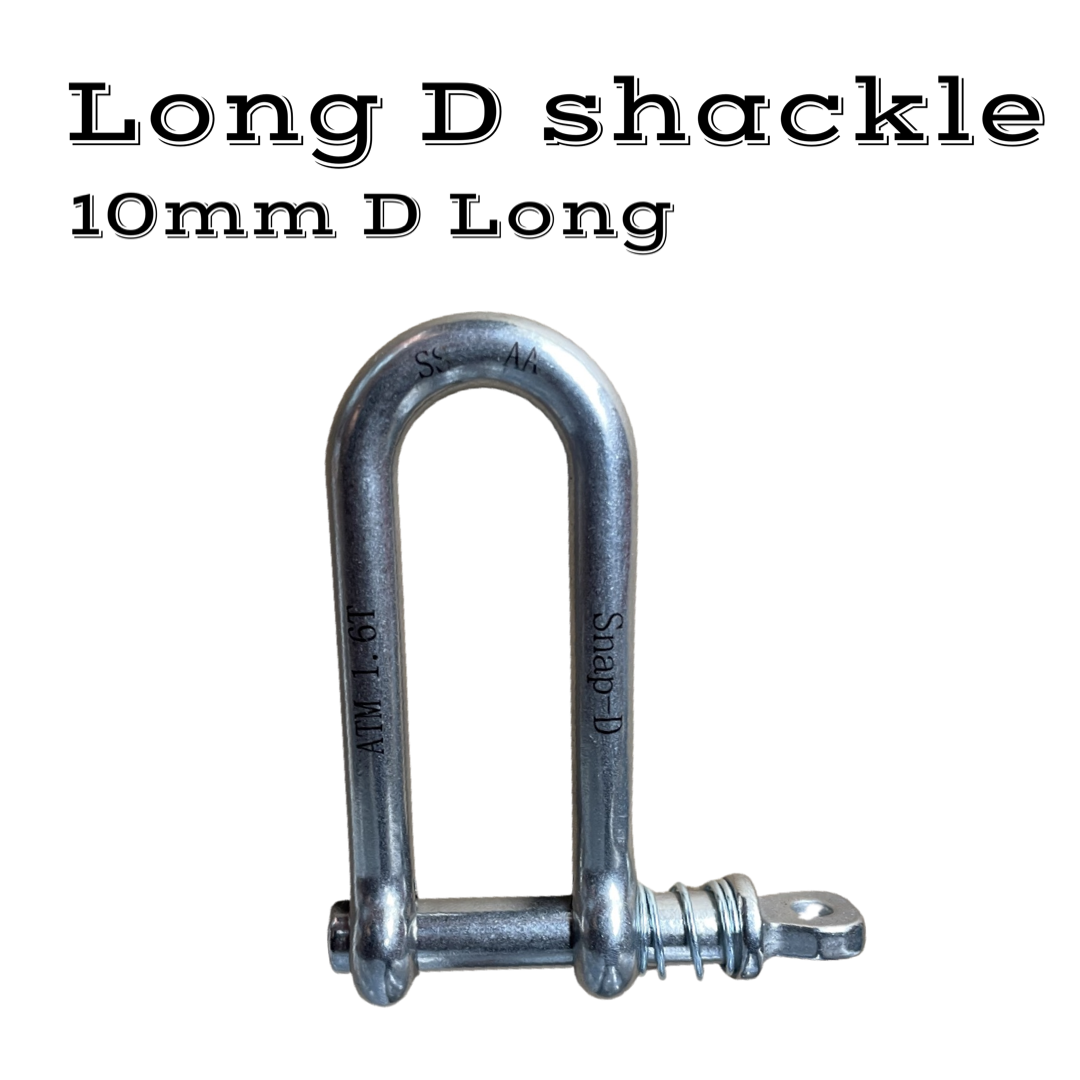
This is the part plenty of towers get wrong: each individual shackle must be rated for the full ATM of the trailer.
Not half.
Not “combined”.
Each shackle.
If you are towing a 3,500kg caravan, and the van requires two safety chains, you need:
- Two safety chains
- Two shackles
- Each shackle rated to 3,500kg ATM
That’s the rule that matters when you’re choosing towing shackles in Australia.
Just as important: 304 stainless steel shackles are for trailers up to 3.5T ATM only. If your trailer is over 3.5T ATM, stainless towing shackles are not the right option. Anything heavier requires Grade 80 hardware.
So if your trailer sits at 3.5T ATM or below, Snap-D’s 304 stainless steel tow-rated shackles are built for that job. If it’s above 3.5T ATM, step up to the required Grade 80 gear instead.
You also need the shackle to be clearly marked for towing. Our Snap-D 13mm Bow Shackle, for example, is rated to 2.5T ATM per shackle, making it a solid option for suitable trailer setups within that range.
Common Compliance Mistakes to Avoid
- Using "Hardware Store" Shackles: If it doesn’t have a proper manufacturer mark and a clear ATM towing rating, it’s not for towing. These are meant for hanging plant pots, not holding 3 tonnes of caravan.
- Getting the rating maths wrong: If your trailer is over 2.5T ATM, you need two safety chains and two shackles — and each individual shackle must be rated for the trailer’s full ATM. A 3.5T caravan needs two 3.5T-rated shackles, not two smaller shackles that “add up”.
- Using stainless over 3.5T ATM: 304 stainless steel towing shackles are only for trailers up to 3.5T ATM. Anything heavier requires Grade 80 hardware.
- Shackles on the Trailer End: By law, the safety chain must be permanently attached to the trailer (usually welded or fixed with a bolt that can't be easily removed). You use the shackle to connect the chain to the vehicle's tow bar.
- Dragging Chains: If your chains are too long, they’ll drag, wear down, and eventually snap under tension. If they’re too short, they’ll bind when you turn a corner. You want just enough slack to allow full turning circles without the chain touching the ground.
Choosing Between D-Shackles and Bow Shackles
Which one do you need?
- D-Shackles: These are narrow and look like a capital 'D'. They are great for direct, straight-line pulls.
- Bow Shackles: These have a more rounded "O" shape. The benefit here is that they allow for more movement and can handle loads from different angles more effectively, perfect for when you're turning tight corners with a large trailer.
For most modern tow bars with thicker attachment points, the Snap-D 13mm Bow Shackle is the go-to choice because it offers that extra bit of "wiggle room" while maintaining a high rating.
Why Snap-D is the Practical Choice
Let’s be honest: standard rated shackles are a pain. You’re constantly worried about the pin vibrating loose and falling off on the highway, or you’re fumbling with a wrench because the pin is seized.
We solved that. Our shackles feature a patented half-turn quick-connect pin with a captive design.
- It’s Fast: No more spinning the pin for thirty seconds. Half a turn and you’re locked.
- It’s Secure: The captive pin stays attached to the shackle, so you can't drop it in the mud or lose it on the road.
- It’s Legal: Our shackles are tow-rated for Australian applications, made from high-quality 304 stainless steel, and clearly stamped with their ATM rating for compliant towing setups up to 3.5T ATM.
Whether you're looking for multi-packs for a dual-chain setup or just need a single replacement, we’ve got you covered.
Summary Checklist for Australian Towers
Before you head off on your next trip, run through this quick checklist:
- Weight Check: Is your trailer ATM over 2,500kg? If yes, you need two safety chains and two shackles.
- Full Rating Check: Is each individual shackle rated for the full ATM of the trailer?
- Material Check: Is your trailer 3.5T ATM or under for 304 stainless steel shackles? If it’s over 3.5T ATM, you need Grade 80 hardware.
- Marking Check: Are your shackles clearly marked with a towing-relevant ATM rating and manufacturer identification?
- Attachment Check: Are the chains permanently fixed to the trailer and crossed under the drawbar?
- Condition Check: Are there any worn links or rusted pins?
Towing safely isn't just about having a big enough engine; it’s about ensuring that if the worst happens, your equipment does its job. Don't risk it with sub-par gear.
Check out our full range of compliant towing shackles or head over to our shackle guide to find the perfect fit for your rig.
Stay safe on the roads, Gov!
Repurposing Assets
LinkedIn Post 1
Headline: Are you towing legal? The "2.5T Rule" every Aussie driver needs to know.
Towing a caravan or boat this weekend? You might be one shackle away from a fine: or worse. In Australia, if your trailer’s ATM is over 2,500kg, one safety chain isn't enough. You legally require TWO.
But it’s not just about the number of chains; it’s about how they connect. For towing in Australia, ATM is the key reference — and each individual shackle must be rated for the trailer’s full ATM.
At Snap-D, we’ve made compliance easy with our patented half-turn shackles. ATM-stamped, tow-rated, and built from 304 stainless steel for trailers up to 3.5T ATM.
Read the full breakdown on our blog: [Link]
#TowingAustralia #CaravanSafety #SnapD #TrailerCompliance
LinkedIn Post 2
Headline: Why "Hardware Store" shackles are a liability for your business.
For businesses running trailers and plant equipment, compliance is everything. Using unrated shackles isn't just a safety risk: it's a massive insurance liability.
In our latest deep dive, we look at the full rating per shackle rule and the 3.5T stainless limit. If your trailer needs two chains, you need two shackles, and each one must match the trailer’s full ATM.
Check out our guide to Aussie trailer safety chain laws: [Link]
#Logistics #TowingSafety #WorkplaceSafety #SnapD
Facebook Post
G'day legends! Boaties and caravanners, listen up. Do you actually need two safety chains?
If your trailer’s ATM is over 2,500kg, the answer is a big YES.
We’ve put together a practical guide on the 2.5T rule, how to cross your chains properly, why each shackle must match your trailer’s full ATM, and why 304 stainless steel shackles are only for trailers up to 3.5T ATM.
Get the facts here: [Link]
#SnapDAustralia #TowingTips #CaravanLife #BoatTrailer
Instagram Caption
Is your rig legal? If you're over 2.5T ATM, you need TWO chains and TWO shackles.
And here’s the bit people miss: each shackle must be rated for your trailer’s full ATM. Plus, 304 stainless steel shackles are only for trailers up to 3.5T ATM.
Tap the link in bio to read the full safety guide!
#SnapD #TowingAustralia #CaravanCamping #ExploreOz #TrailerSafety
Reel Concept
Visual: Close up of a heavy caravan hitch. Cut to a cheap hardware-store shackle vs. a real Snap-D ATM-stamped shackle.
Audio: Trending upbeat Aussie track or a voiceover.
Voiceover: "Think one chain is enough? If you're over 2.5 tonnes, think again. Aussie law says you need two chains and two shackles. And here’s the catch: each shackle must be rated for your trailer’s full ATM. Running stainless? That’s for trailers up to 3.5T ATM. Over that, you need Grade 80. Snap-D makes compliant towing easy: push in, half a turn, job done."
Text Overlay: Over 2.5T ATM? 2 Chains. 2 Shackles. Full Rating Per Shackle.
Also in Information Centre


Towing Terminology 101: ATM, GTM, and TBM Explained for Boaties
Confused by ATM, GTM and TBM? Learn the difference, understand Australian towing compliance, and choose the correct Snap-D shackle for your trailer.


Follow