Towing AU to NZ? Here's What Changes at the Border (Shackle Compliance Guide)
Planning a trip across the ditch with your boat, caravan, or trailer in tow? Mate, there's more to think about than just packing your jandals and getting used to saying "sweet as." When it comes to towing compliance, what flies in Australia doesn't always cut it in New Zealand: especially when we're talking about rated shackles and safety chain connections.
If you think a D Shackle is just a D Shackle, you're in for a surprise. New Zealand has stricter towing regulations than Australia, and your perfectly legal Aussie setup might not meet Kiwi standards. Let's break down what changes at the border and how to stay compliant on both sides of the Tasman.
Australia's Shackle Requirements: The Basics
Back home in Australia, towing chain connectors/shackles need to be appropriate for the job and commonly reference AS 2741-2002 for shackle dimensions and markings. Grade S is a common marking seen on lifting shackles, but for towing compliance in Australia the key check is simpler: the shackle must be rated for the trailer’s ATM (Aggregate Trailer Mass). Snap-D stainless shackles are specifically tow-rated for this purpose.
Here's what matters:
ATM is the Australian reference: In Australia, towing compliance is based on the trailer’s ATM, not NZ’s MTM. If you're towing here, match the shackle rating to the trailer’s full ATM.
Each shackle must cover the full ATM: This catches plenty of people out. Each individual shackle must be rated for the trailer’s FULL ATM. Example: if your caravan is 3.5T ATM and uses two safety chains, both shackles must each be rated to 3.5T ATM. You do not halve the rating because there are two chains.
The 2.5T “Two Chains” Rule (Australia): If your trailer is over 2,500kg ATM, you generally need two safety chains, which means two shackles (one for each chain). Trailers 2,500kg ATM and under typically use one.
Material limit for stainless shackles: Stainless steel shackles are suitable for trailers up to 3.5T ATM only. For trailers over 3.5T ATM, Grade 80 hardware is required instead.
Markings to look for (Australia): Grade S may be a familiar lifting mark, but for towing the real question is whether the shackle is clearly and permanently marked and tow-rated to suit the trailer’s ATM.
Most Aussie towers are familiar with this setup: match your shackles/connectors to your ATM, make sure you’re set up for one vs two chains correctly, and confirm you’re using properly marked hardware. But here’s where it changes at the border...
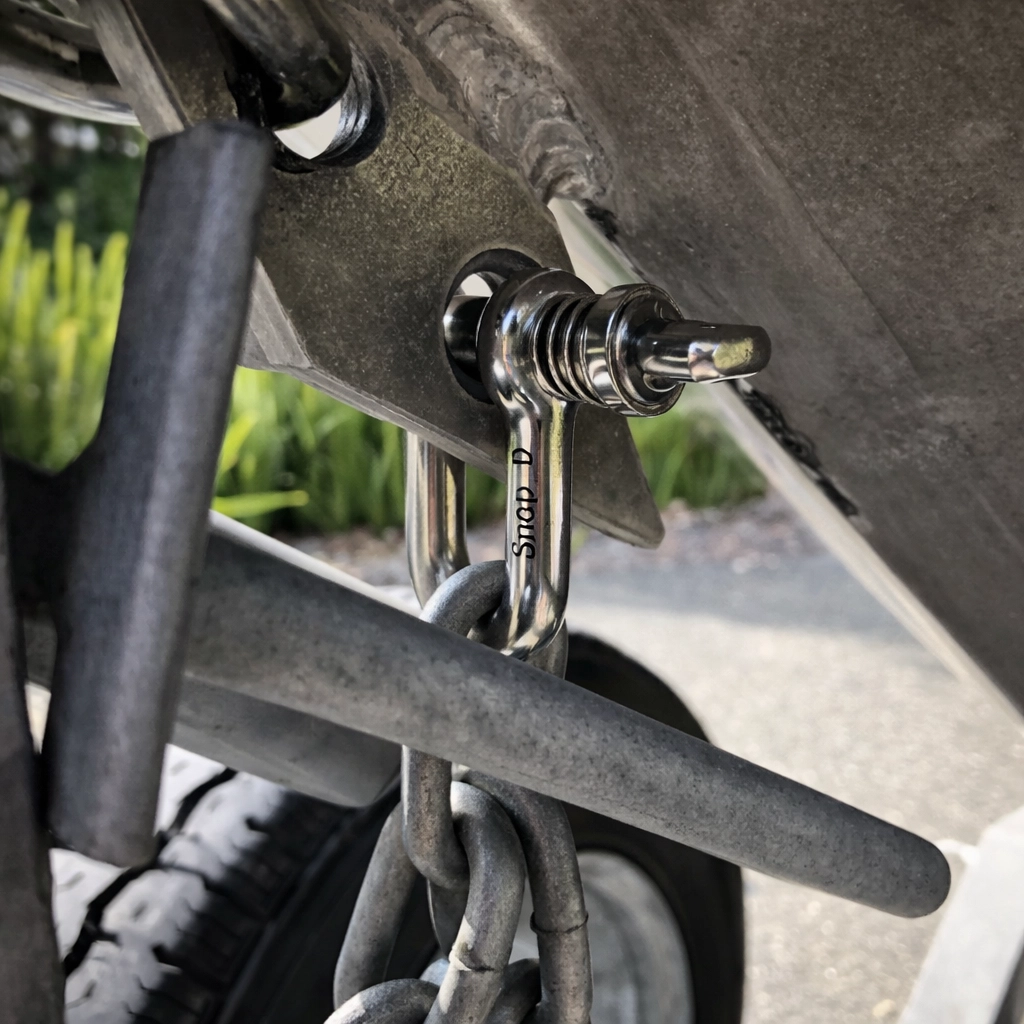
New Zealand Cranks It Up a Notch: NZS 5467
Cross the Tasman, and the terminology (and what inspectors look for) changes. In New Zealand, towing chain connectors are assessed against NZS 5467, and the trailer mass reference you’ll commonly see is MTM (Maximum Towing Mass).
NZ uses MTM + NZS 5467: Where Australia talks ATM, NZ commonly talks MTM and expects hardware that’s assessed/marked to NZS 5467.
Markings matter in NZ: NZ compliance is very “markings-driven”. Your connector/shackle should be clearly and permanently marked to show NZS 5467 and an MTM rating, plus traceability/ID markings as required. If it’s not marked correctly, it can be treated as non-compliant even if it “looks strong enough”.
The practical takeaway: a setup that’s fine in Australia can get questioned in NZ if it’s missing the NZS 5467 / MTM markings NZ inspectors expect.
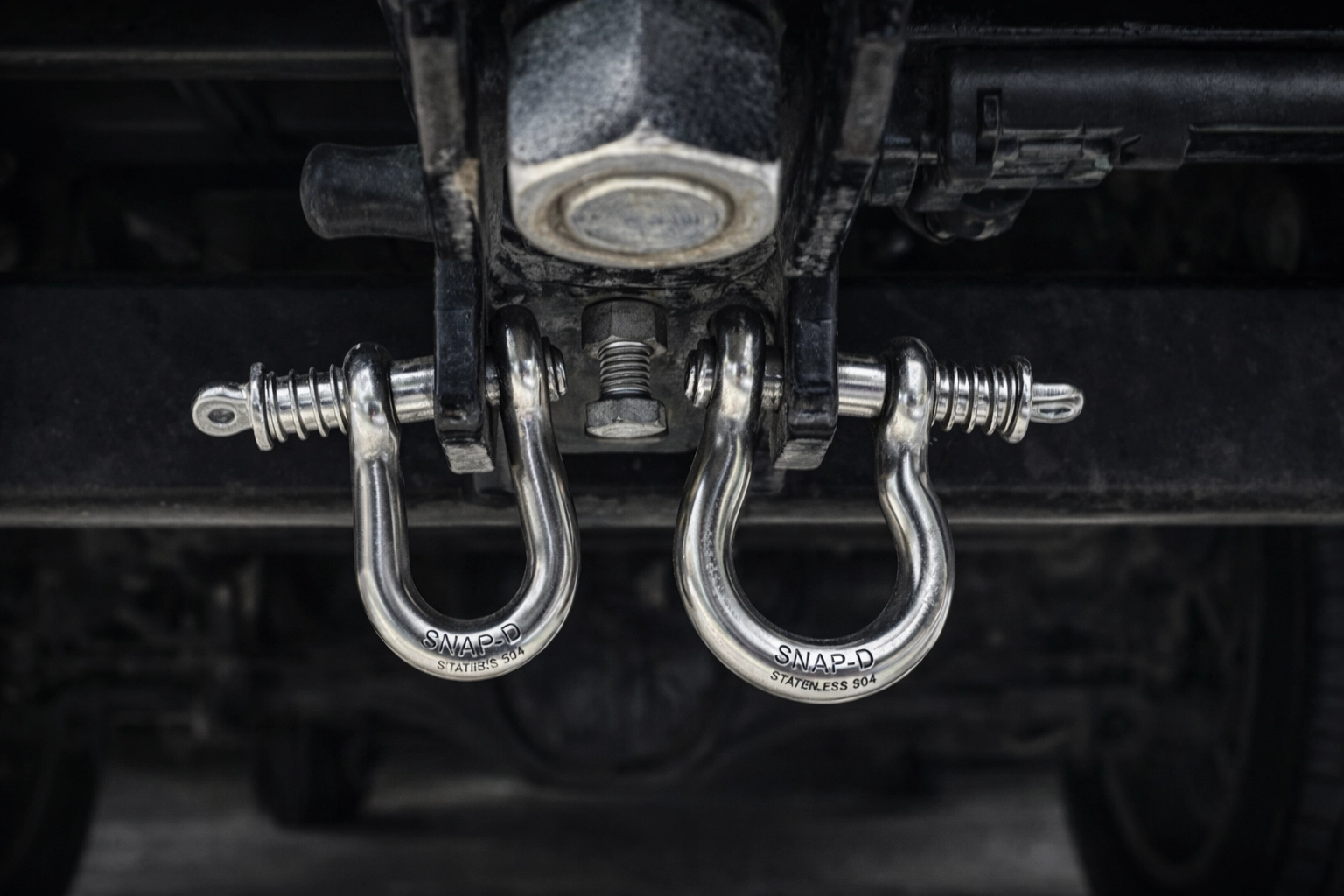
The Compliance Headache: Two Countries, Two Standards
So what's a trans-Tasman tower supposed to do? Carry two sets of shackles and swap them out at the airport? Try explaining that one to the customs officer.
The reality is that many Aussie travelers don't realise their Bow Shackles or D Shackles aren't compliant across the ditch until it's too late. You rock up to a campsite in Queenstown, and some helpful local mentions your safety chains aren't up to spec. Or worse: you're mid-trip and get pulled over for a roadside inspection.
The traditional options aren't great:
- Buy cheap shackles in NZ (and deal with rust, seized pins, and dodgy quality)
- Carry two sets and swap them (time-consuming and easy to forget)
- Cross your fingers and hope nobody notices (not recommended, and definitely not safe)
Here's the thing: different compliance standards exist for good reasons: they're about keeping everyone safe on the road. But that doesn't mean compliance has to be complicated.
The Solution: Dual-Certified Shackles
This is where Snap-D shackles come into their own. Our shackles are dual-certified to meet the relevant requirements for both jurisdictions: Australia (ATM-focused towing compliance) and New Zealand (MTM-focused compliance under NZS 5467).
Every Snap-D shackle is permanently marked so it can be checked on either side of the ditch. That means the shackle body carries the compliance markings inspectors and customers are looking for, including an ATM rating reference for Australian towing use and NZS 5467 / MTM marking for New Zealand.
Practical note when you’re setting up for a heavier van: if your trailer is over 2,500kg ATM (common with 3.5T-class caravans), make sure you’re running the two-chain/two-shackle arrangement in Australia. And just as importantly, each individual shackle must be rated to the trailer’s full ATM. If the van is 3.5T ATM, each shackle must be 3.5T-rated. Also note that Snap-D 304 stainless steel shackles are for trailers up to 3.5T ATM only. Above that, you’ll need Grade 80 hardware.
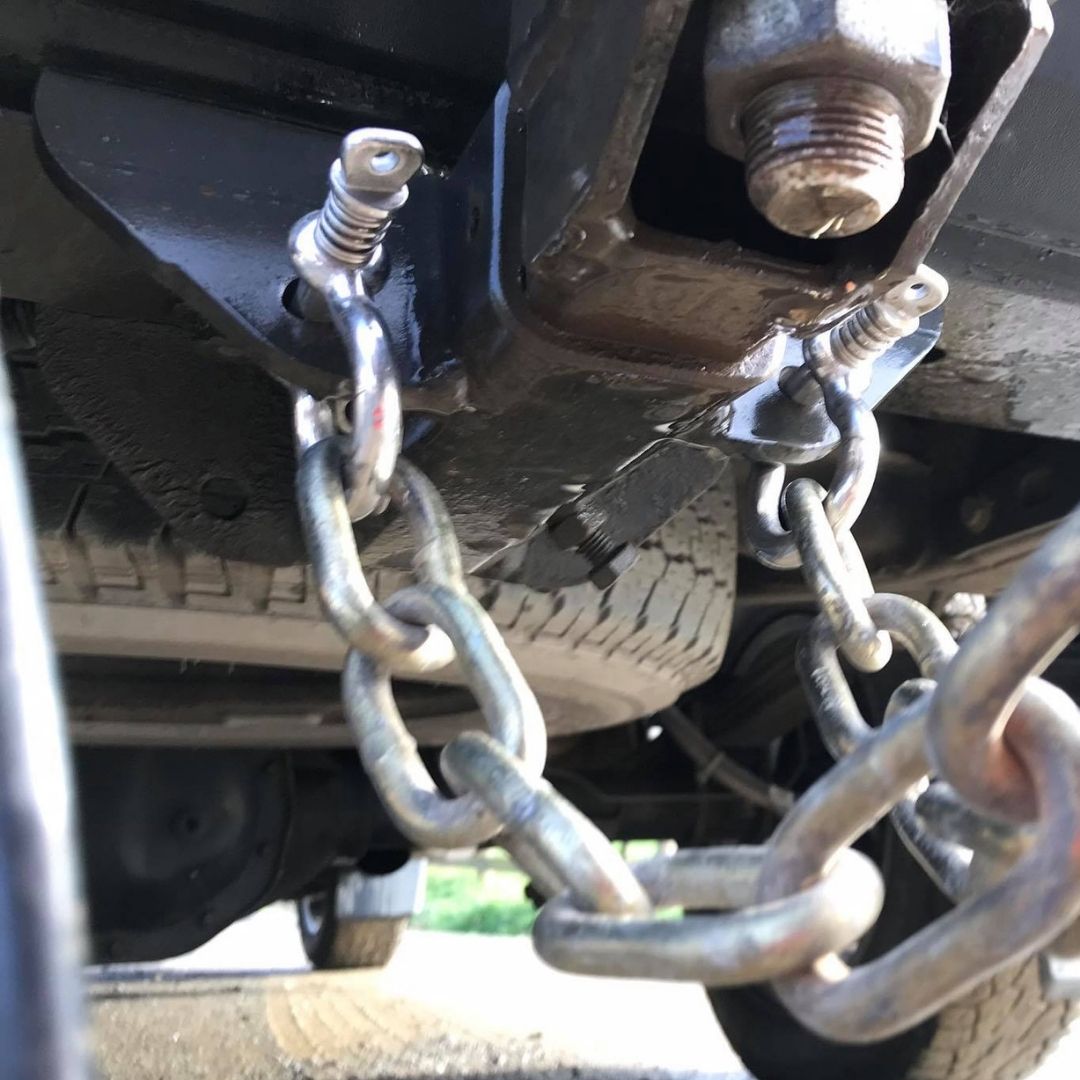
But compliance is just the starting point. Let's talk about what makes these shackles actually good to use.
The Half-Turn Revolution
Traditional shackles are a pain in the arse, let's be honest. Screw pins that seize up, get lost, or require tools to undo. You're at the boat ramp with a queue behind you, trying to thread a pin with cold, wet hands while everyone watches and judges.
Snap-D shackles use a patented half-turn quick-connect design with a captive pin. Push in, half turn, done. No threading, no tools, no dropped pins rolling into the water. Disconnecting is just as quick: half turn back, and you're free.
The captive pin means it literally cannot get lost. It stays attached to the shackle body even when fully open. This might sound like a small thing until you've spent 20 minutes searching for a dropped shackle pin in the dirt at a campsite in the dark or worse straight into the briny sea... Ask us how we know!
At boat ramps and campsite arrivals, this speed matters. You're in and out faster, which means less stress, fewer hold-ups, and more time actually enjoying your trip instead of fumbling with connections.
Built to Last: 304 Stainless Steel
Both sides of the Tasman have one thing in common: harsh marine environments. Salt spray, boat ramp water, coastal camping: it all takes a toll on your gear.
Snap-D shackles are constructed from 304-grade stainless steel, which offers excellent corrosion resistance. This isn't cheap plated steel that'll rust through after a season. Marine-grade stainless handles the salt, the wet, and the general abuse that comes with towing in coastal Australia and New Zealand.
For clarity on compliance: 304 stainless steel Snap-D shackles are for trailers up to 3.5T ATM only. If your trailer is over 3.5T ATM, Australian requirements step beyond stainless tow shackles and into Grade 80 hardware.
This durability means your investment in compliant shackles isn't a one-trip solution. These shackles will be doing the job for years, across multiple trips, without degrading or losing their markings.
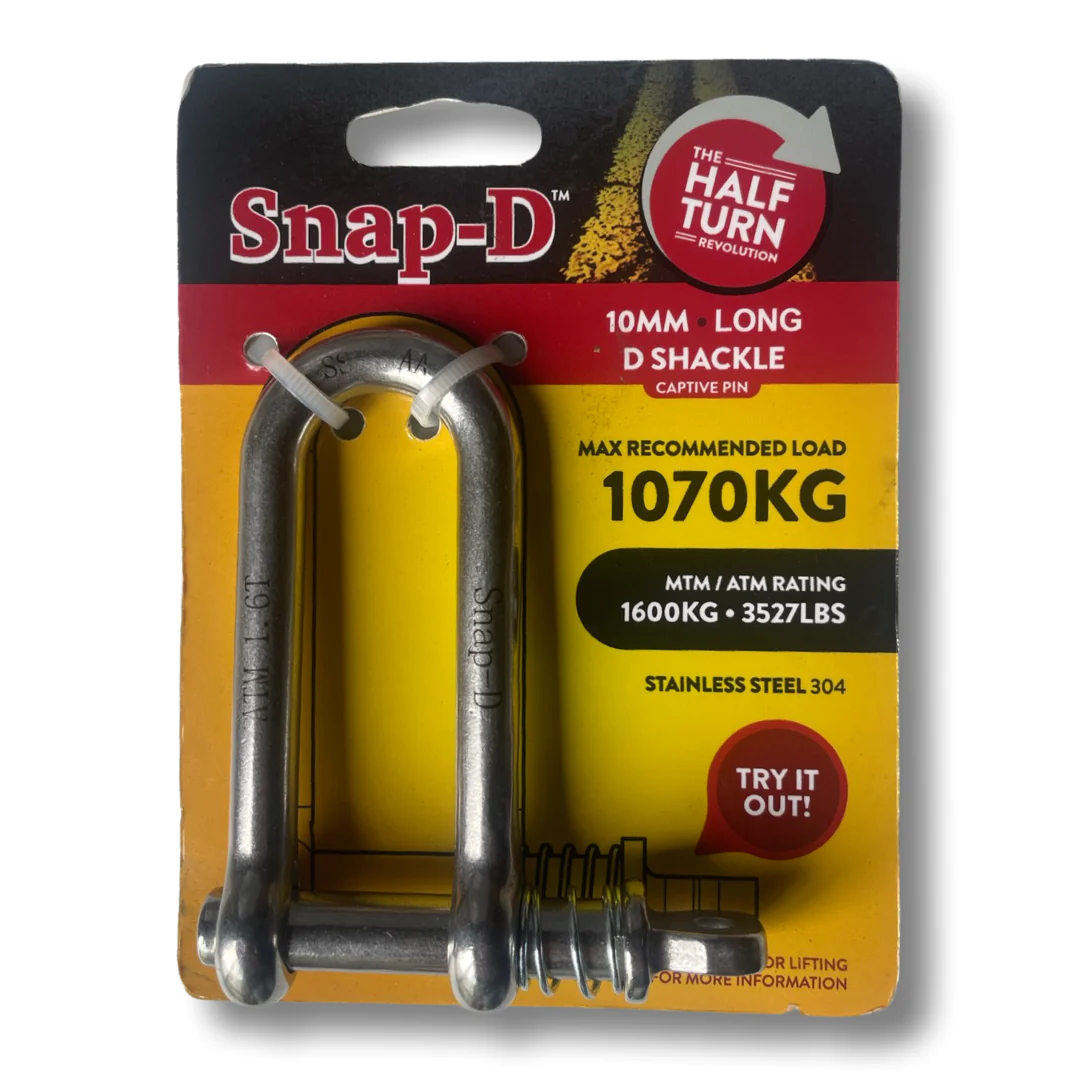
Sizing Your Shackles Right
Compliance standards are one thing, but you also need to make sure you're using the right size shackle for your specific trailer and tow bar setup.
D Shackles work brilliantly for most standard trailer applications: boat trailers, box trailers, and camper trailers where the safety chain connection points are close to the tow hitch. Bow Shackles give you more lateral movement and are often better for caravans, larger trailers, or situations where the chain needs more freedom to move.
The important bit: measure your tow bar hole diameter before ordering. Snap-D shackles come in various sizes (8mm, 10mm, 12mm, 13mm, 17mm and 19mm), with ratings that need to match your trailer’s compliance requirements. In Australia, that means matching to ATM. In New Zealand, that means matching to MTM. You need a shackle that fits your tow bar properly and meets the weight requirements for your specific trailer.
Not sure which size you need? Check out our shackle guide for detailed sizing recommendations, or get in touch and we'll help you figure it out.
Crossing the Ditch with Confidence
Taking your trailer or boat to New Zealand should be about the adventure, not stressing over whether your towing gear is going to pass inspection. With dual-certified NZS 5467 shackles that also meet Australian standards, you can tow confidently on both sides of the Tasman.
The combination of compliance, quality stainless steel construction, and the practical half-turn design means you're set up properly for whatever your trans-Tasman travels throw at you. From Queensland boat ramps to South Island camping spots, your connections are sorted.
Ready to upgrade to shackles that work in both countries? Check out our range of Snap-D D Shackles and Bow Shackles: all dual-certified and built for the long haul.
Safe travels, and enjoy the adventure on both sides of the ditch.
Also in Information Centre


Towing Terminology 101: ATM, GTM, and TBM Explained for Boaties
Confused by ATM, GTM and TBM? Learn the difference, understand Australian towing compliance, and choose the correct Snap-D shackle for your trailer.


Follow