Trailer Safety Chain Shackles: Are You Making These 3 Compliance Mistakes?
If you're towing a trailer, caravan, or boat in Australia, your safety chains are your last line of defence if the coupling fails. But here's the thing: heaps of people get the shackles wrong (usually in ways that feel “close enough” right up until they’re not).
And we're not talking about a minor oversight, some of these mistakes could land you with a fine, fail a roadworthy inspection, or worse, put you and other road users at serious risk.
Let's cut through the confusion and look at the three most common compliance mistakes people make with trailer safety chain shackles, and how to avoid them.
Mistake #1: Using D Shackles on Heavy Trailers (or to Extend Chains)
Here’s a classic one: you’ve got a trailer safety chain that’s just a bit too short, so you grab another d shackle to extend it. Feels sensible in the moment, right?
Wrong. Using a second shackle to extend your safety chain is illegal under Australian transport rules.
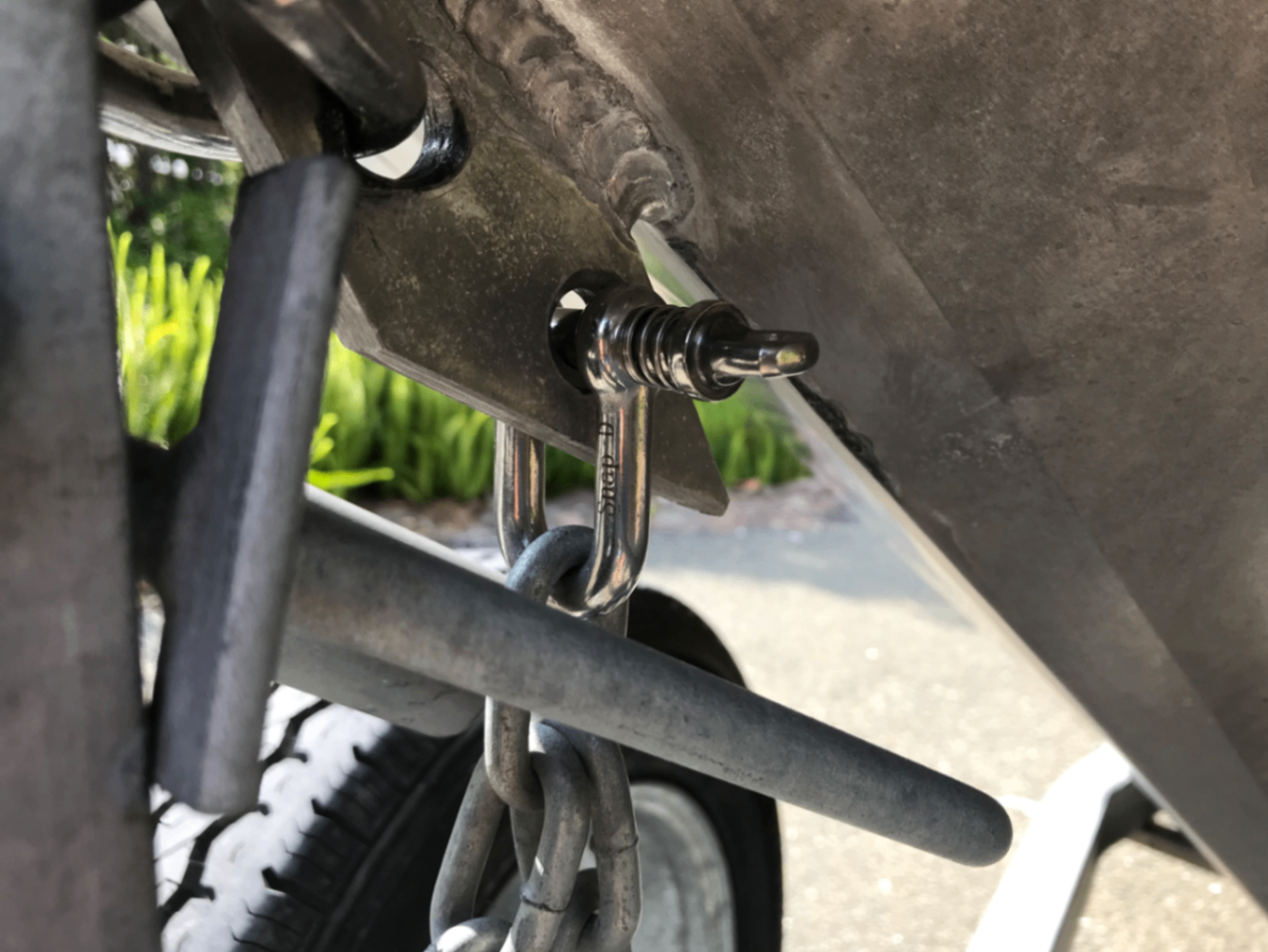
Even worse, if your trailer weighs over 3.5 tonnes (that's the ATM, Aggregate Trailer Mass), you can't use stainless steel shackles for the towing connection. For anything over 3.5t ATM, you need Grade 80 hardware in the towing setup.
What you should do instead:
- For trailers up to 3.5t ATM: Use a tow-rated shackle at each connection point, rated by ATM for towing use. If your trailer’s ATM is over 2.5t, you must run two safety chains and two shackles (one shackle per chain).
- For trailers over 3.5t ATM: Stainless steel shackles are not compliant. Use Grade 80 hardware and make sure each towing component suits the trailer’s full ATM.
If you're unsure about your trailer's weight or chain setup, check the compliance plate on your trailer. It'll list the ATM and GTM (Gross Trailer Mass), but for towing shackle compliance, ATM is the key number.
Mistake #2: Using the Wrong Materials (Stainless Steel Isn't Always the Answer)
This one catches a lot of people out. You see shiny stainless steel shackles and think, "Perfect, won't rust, looks good, must be better." Not so fast.
Stainless steel shackles are only for trailers up to 3.5 tonnes ATM in Australia. Once you go over 3.5t ATM, you need Grade 80 hardware for the towing setup.
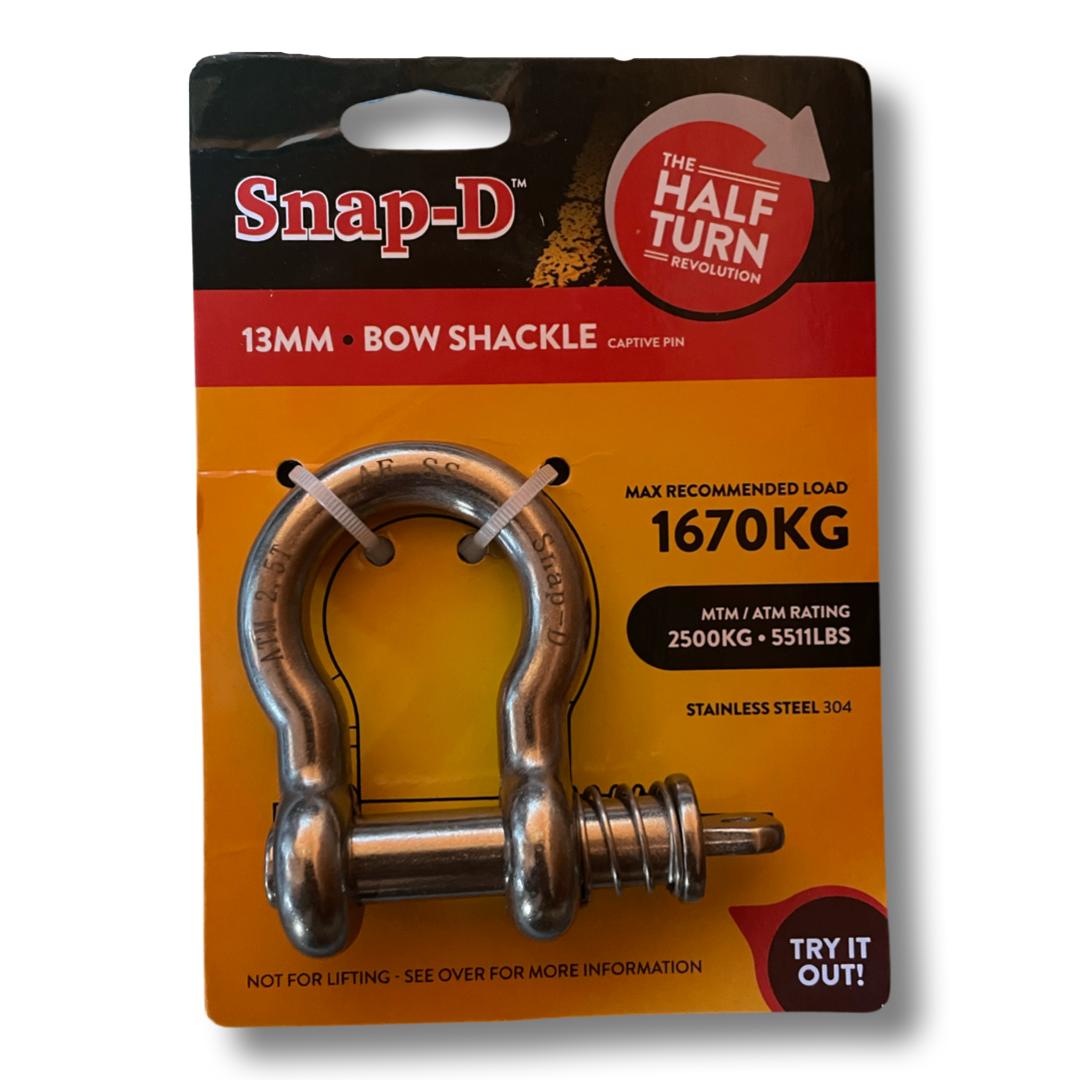
But here's where people get tripped up: stainless steel shackles like Snap-D's range are absolutely fine for trailers, caravans, boats, and light trailers up to 3.5t ATM, as long as they're tow-rated for ATM. In fact, they're often the better choice for lighter setups because they resist corrosion from saltwater and road grime.
Material mistakes to avoid:
- Using stainless steel shackles over 3.5t ATM: Not compliant. Stick to Grade 80 hardware.
- Assuming lifting markings decide towing legality: For towing, the key issue is whether the shackle is tow-rated for the trailer’s ATM.
- Unmarked or non-certified shackles: If it doesn't have a clear towing rating or supporting certification, don't use it.
Bottom line: if you're towing a boat, camper, or single/tandem axle trailer up to 3.5t ATM, a tow-rated stainless steel shackle is the right fit. If you're towing something heavier, you need Grade 80 hardware.
Mistake #3: Mismatching Your Shackle and Chain Ratings
This is the mistake that’ll fail a safety inspection every time: your shackle’s rating doesn’t stack up with your trailer’s weight and chain setup.
For towing in Australia, ATM is the key rating. Lifting gear often talks in WLL and Grade S, but towing shackles are judged on whether they are tow-rated for the trailer’s ATM.
And here’s the big one: each individual shackle must be rated for the trailer’s full ATM. Not half. Not “shared across two chains”. The full ATM.
How to match your shackle to your trailer:
- Check your trailer's ATM on the compliance plate.
- Match each shackle to the trailer’s full ATM. If your trailer is 3.5T ATM, then each of your two shackles must be rated for 3.5T.
- Cross-reference with the chain setup. If your trailer is over 2.5T ATM, you need two safety chains and two shackles, one shackle per chain.
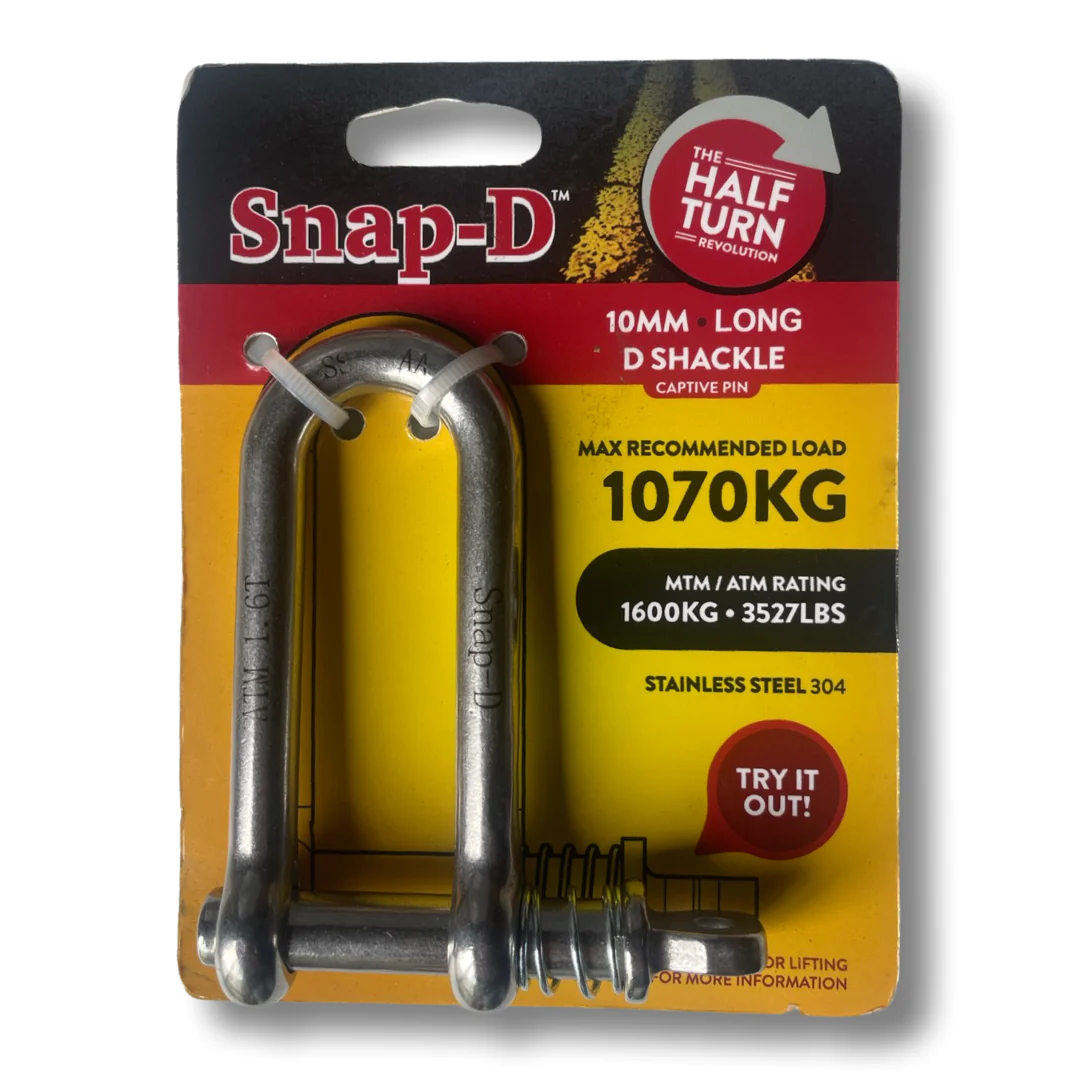
- Use bow shackles for wider connections. If your tow bar or trailer attachment point has a larger hole, a bow shackle can suit the connection better than a d shackle.
Let’s say you’ve got a caravan with a 3500kg ATM. If it requires two chains, each shackle still needs to be rated for 3500kg ATM. One compliant shackle per chain. Full ATM on each one.
Quick Compliance Checklist (So You Don't Stuff It Up)
Before you hitch up, run through this (your future self at the roadside will thank you):
- Are your shackles tow-rated for your trailer’s ATM?
- Is your trailer over 2.5t ATM? If yes, you need two safety chains and two shackles (one shackle per chain).
- Is your trailer up to or over 3.5t ATM? Stainless steel shackles are for up to 3.5t ATM only. Over that, you need Grade 80 hardware.
- Is each individual shackle rated for the trailer’s full ATM?
- Is the shackle properly identified and backed by certification? You should be able to confirm the maker and towing rating.
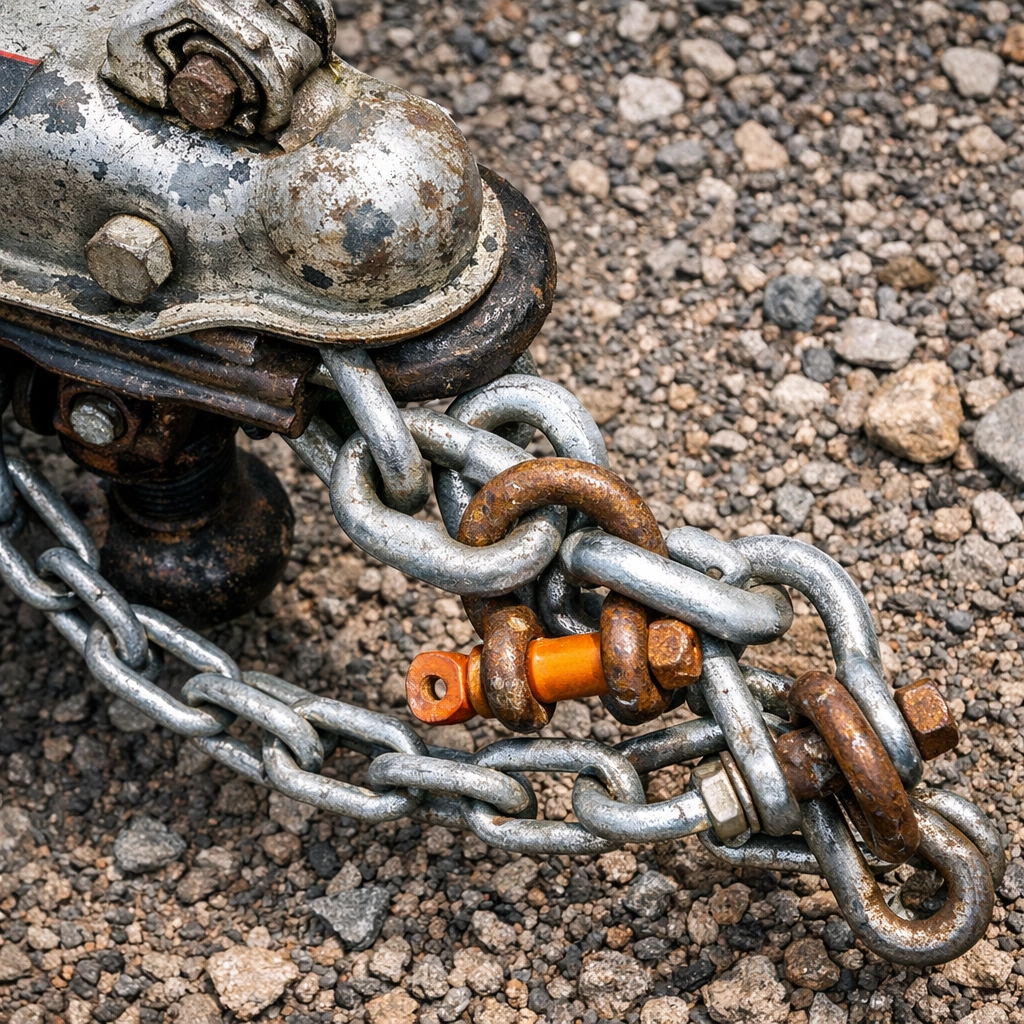
- Are your chains crossed under the tow bar receiver? This is required for compliance and helps stop the chains dragging on the ground if the coupling fails.
- Are all components sourced from certified manufacturers? You should be able to request supporting documentation if needed.
If you've ticked all those boxes, you're in good shape. If not, it's time to upgrade your gear.
How Snap-D Keeps You Compliant (and Makes Hitching Up Way Faster)
Look, we get it, shackles aren't the most exciting part of towing. But using the right ones matters, and using ones that don't waste your time is even better.
That's where Snap-D's patented half-turn design comes in. Instead of fiddling with a screw-pin shackle (which inevitably seizes up or falls out when you least expect it), Snap-D shackles use a spring-loaded captive pin that you can connect and disconnect with half a turn. No threads. No lost pins. No swearing at the trailer in a muddy paddock.
Every Snap-D shackle is:
- Tow rated and transport compliant for Australia and New Zealand
- Made from marine-grade 304 stainless steel (perfect for boats and coastal towing)
-
Load rated and stamped so you know exactly what you're working with
(Quick heads-up: you’ll sometimes see “MTM” used in NZ contexts, but in Australia you’ll mainly be working off ATM/GTM on the trailer plate.) - Available in d shackle and bow shackle options to suit different tow bar and trailer setups
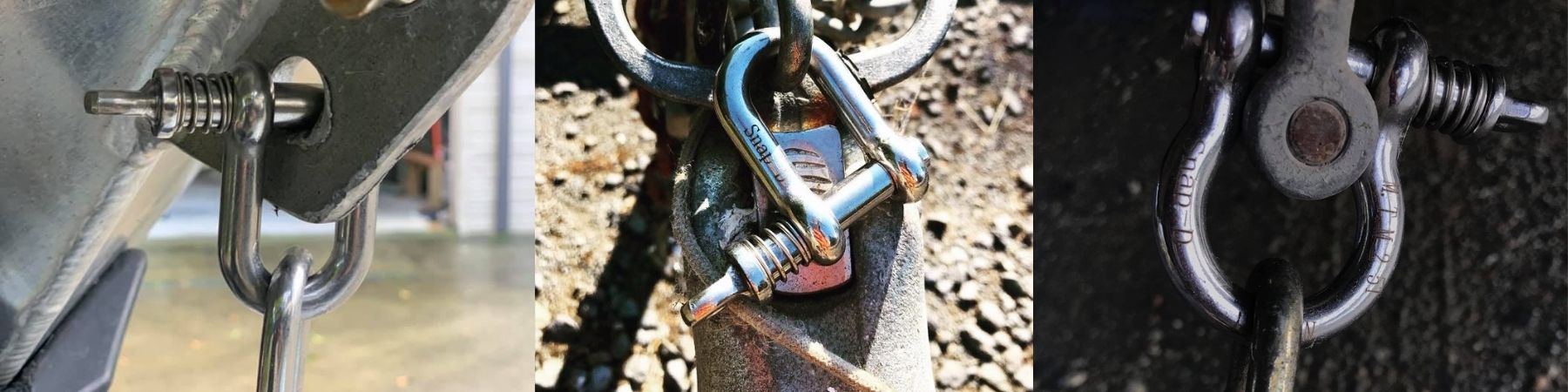
Plus, because the pin is captive, you'll never drop it in the dirt again. That alone is worth it.
Final Word: Don't Guess: Get It Right
Trailer safety chain shackles might seem like a small detail, but they’re a critical part of your towing setup. The rules exist for a reason, and getting them wrong could cost you a fine, a failed inspection, or a dangerous situation on the road.
So before your next trip, take five minutes to check your shackles and chains. Make sure they’re rated, matched, and compliant to AS 2741-2002 where applicable. And if you’re due for an upgrade, check out the Snap-D shackle range: we’ve done the hard work so you don’t have to.
Repurposing Assets (Social)
LinkedIn Post #1 (compliance + education)
Trailer safety chains: the “small” bits that can cause big problems.
3 compliance mistakes we see all the time:
- Daisy-chaining shackles to “extend” a short chain (nope).
- Running stainless steel shackles on trailers over 3.5T ATM.
- Misreading shackle ratings: each individual shackle must match the trailer’s full ATM.
Also worth remembering: over 2.5T ATM = two safety chains and two shackles.
If you’re unsure, start with the compliance plate. For towing shackle compliance in Australia, ATM is the key number.
Full checklist here: https://snapd.au/collections/all-shackles
LinkedIn Post #2 (markings + practical checks)
Quick shackle check before you tow:
If it’s a safety-chain shackle, Aussie compliance isn’t about lifting labels. It’s about whether the shackle is tow-rated for your trailer’s ATM.
Quick checks:
- Confirm your trailer’s ATM
- Make sure each shackle is rated for the trailer’s full ATM
- If the trailer is over 2.5T ATM, run two chains and two shackles
- If the trailer is over 3.5T ATM, use Grade 80 hardware
Two-minute check. Long-term peace of mind.
More on compliant options: https://snapd.au/collections/all-shackles
Facebook Post (straight talk + witty)
If your safety chain setup is “near enough”… it’s probably the first thing a roadside inspector will notice.
Three common shackle stuff-ups:
- Daisy-chaining shackles to extend a short chain
- Using stainless steel shackles on trailers over 3.5T ATM
- Getting ratings wrong (each shackle must suit the trailer’s full ATM)
And remember: over 2.5T ATM = two safety chains and two shackles.
Have a squiz at your compliance plate before you hit the highway.
Gear here: https://snapd.au/collections/all-shackles
Instagram Caption (short, punchy, AUS/UK)
Safety chains aren’t glamorous… but they’re what you’re relying on if the coupling lets go.
Quick checks before you tow:
✔️ Over 2.5T ATM? You need two safety chains and two shackles
✔️ Each shackle must match the trailer’s full ATM
✔️ Over 3.5T ATM? Stainless steel is out. Use Grade 80
Less guessing. More towing.
Explore Snap-D: https://snapd.au/collections/all-shackles
Safe towing.
Also in Information Centre


Towing Terminology 101: ATM, GTM, and TBM Explained for Boaties
Confused by ATM, GTM and TBM? Learn the difference, understand Australian towing compliance, and choose the correct Snap-D shackle for your trailer.


Follow