Aussie Towing Laws: Is Your Trailer Safety Chain Shackle Actually Legal?
G’day, legends. Paul Bennett here from Snap-D Australia.
If you’ve spent any time at a boat ramp, a caravan park, or a worksite, you’ve probably seen some pretty "interesting" towing setups. We Aussies love to hit the road with a trailer in tow, but there’s one small piece of hardware that causes more confusion, more roadside arguments, and more potential for disaster than almost anything else: the humble shackle.
Specifically, the safety chain shackle.
There’s a lot of "bloke at the pub" advice floating around regarding what is and isn't legal when it comes to attaching your safety chains to your towbar. Some reckon any old shackle will do; others think you need a shackle the size of a dinner plate to stay legal.
The truth? Most people are getting it wrong, and it’s not just about avoiding a fine from the boys in blue. It’s about making sure that if your hitch fails at 100km/h on the M1, your trailer stays behind your vehicle and doesn't become a multi-tonne missile heading into oncoming traffic.
Let’s break down the Aussie towing laws and see if your setup actually makes the grade.
The "Hardware Store" Trap: Why Cheap Shackles are Dangerous
We’ve all been there. You’ve just bought a new trailer or you’ve realised you lost a shackle, so you pop into the local hardware store and grab a couple of zinc-plated "D" shackles from the bin in the fastener aisle. They’re cheap, they look shiny, and they seem sturdy enough, right?
Wrong.
Those shackles are what we call "unrated" hardware. They are designed for hanging a gate or securing a dog lead, not for the dynamic forces involved in towing. In Australia, if a shackle doesn't have a rating stamped into it, it has no place on your towbar.
Under Australian standards and the Vehicle Standards Bulletin 1 (VSB1), which is basically the "trailer bible" in this country, shackles used to connect safety chains must be fit for purpose. Using an unrated shackle is a massive gamble. In a breakaway situation, an unrated shackle can shear off or deform instantly. If that happens, your safety chains are useless.
Understanding the Legal Standards: AS 2741 and Beyond
When you look for a "legal" shackle in Australia, you’ll usually see a reference to AS 2741. This is the Australian Standard for lifting shackles. Because there wasn't a specific national standard for towing shackles for a long time, the transport authorities pointed everyone toward the lifting standard.
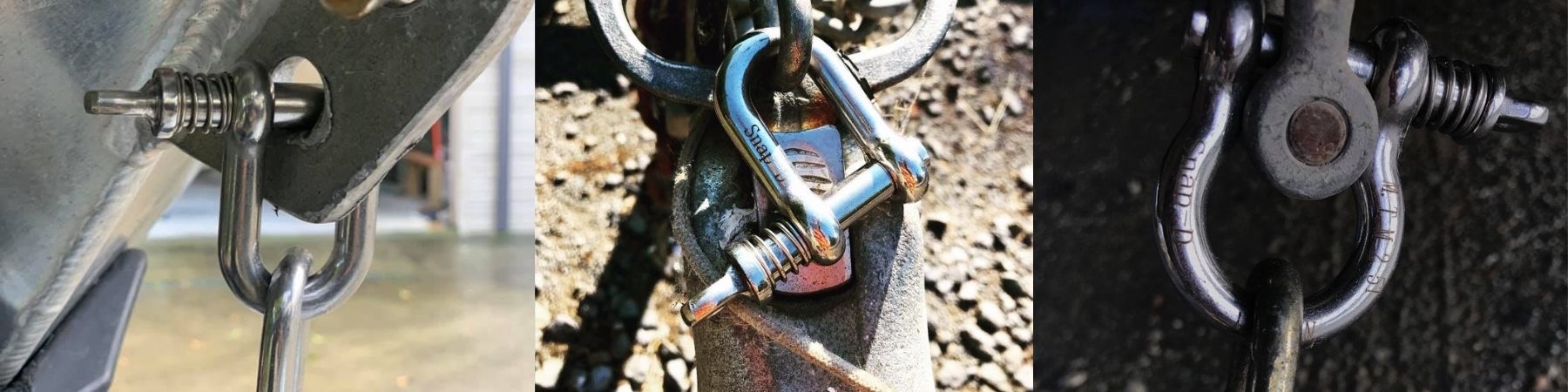
A "Grade S" shackle (usually identified by a yellow pin, though ours are high-grade stainless) that meets AS 2741 is the gold standard for most Aussie road authorities.
However, at Snap-D Australia, we went a step further. Our shackles are certified to NZS 5467. Now, I know what you’re thinking: "Gov, you said we're strictly Aussie here!" And we are. But here’s the thing: NZS 5467 is a specific standard for towing components, which is actually more relevant to what you’re doing on the road than a lifting standard.
By meeting this rigorous standard, Snap-D shackles provide a level of safety and engineering that exceeds the common requirements found across our States and Territories. When a copper or a transport officer looks at your rig, seeing a clearly marked, certified shackle like a Snap-D 12mm D Shackle tells them you’re taking safety seriously... no fine for you today!
MTM vs. WLL: Don’t Get Your Numbers Mixed Up
This is where a lot of caravanners and boaties get a bit crossed up. You’ll see two different sets of numbers on rated shackles, and it’s vital to know the difference.
- WLL (Working Load Limit): This is a lifting term. It refers to the maximum vertical mass the shackle is rated to lift.
- MTM (Maximum Towing Mass) / ATM (Aggregate Trailer Mass): This is the total weight of the trailer and its load when it’s rolling on the road.
Because towing involves a rolling load rather than a vertical lift against gravity, a shackle’s towing capacity is significantly higher than its lifting capacity. For example, our 10mm D Shackle has a Max Recommended Load of around 1,000kg, but it is rated for an MTM of 1600kg.
When you’re choosing a shackle, you need to ensure the MTM rating on the shackle meets or exceeds the ATM of your trailer. If you’re towing a 3.5-tonne caravan, you need shackles rated for at least 3500kg MTM.
The Rules of Attachment: Where do the Shackles Go?
There’s a bit of confusion about how the chains should be attached. According to Australian regulations for trailers up to 3.5 tonnes:
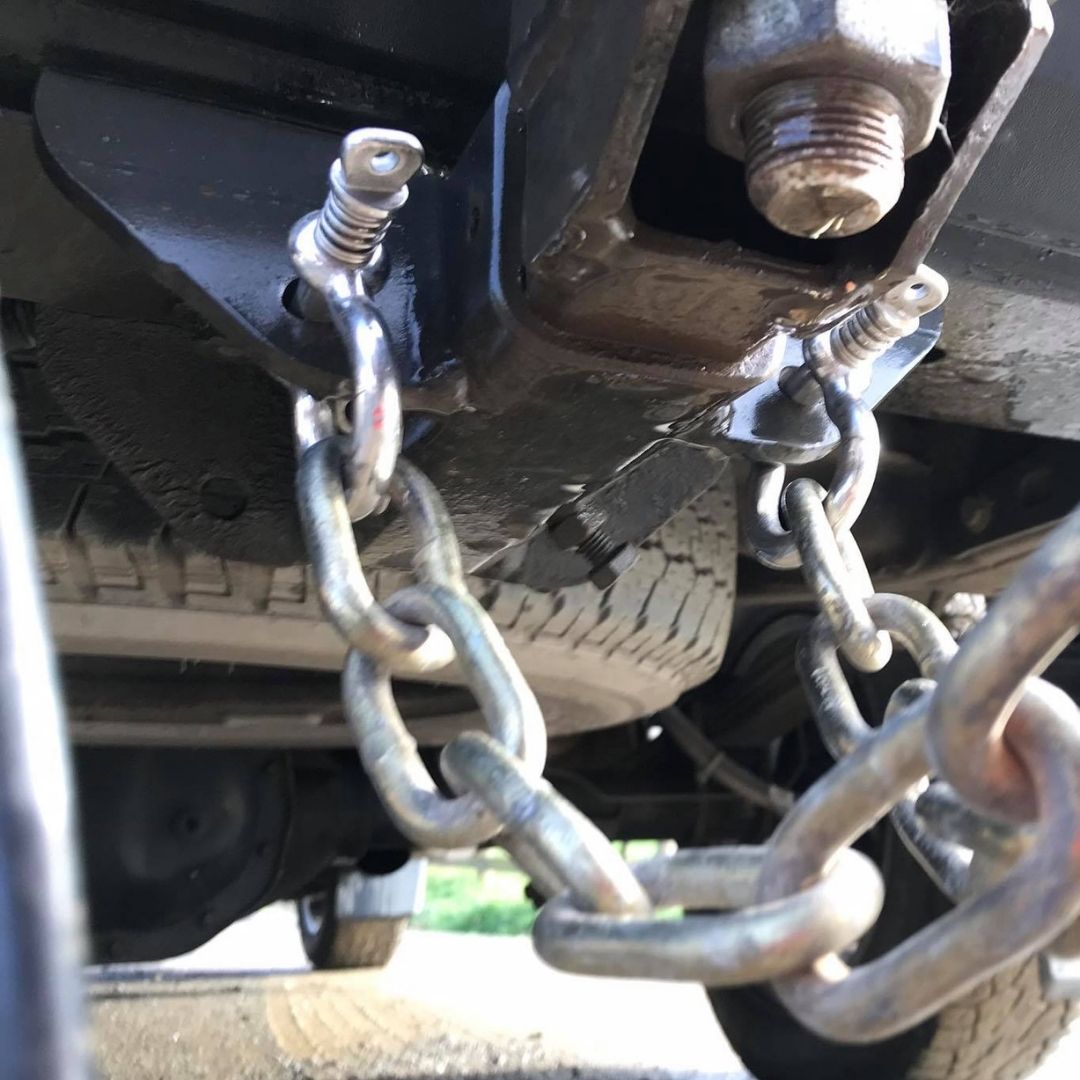
- The safety chain must be permanently attached to the trailer (usually welded to the drawbar). You generally cannot use a shackle to connect the chain to the trailer side.
- The shackle is used to connect the other end of that chain to the towbar of your vehicle.
If your trailer has two safety chains (required for anything over 2.5 tonnes ATM), you need two rated shackles. And remember: cross those chains! Crossing them under the drawbar creates a "cradle" that will catch the drawbar and keep it off the road surface if the coupling fails.
The Snap-D Revolution: Why Our Shackles are Different
If you’ve ever fumbled with a traditional screw-pin shackle in the dark, or had one seize up because of a bit of salt spray and grit, you know how frustrating they can be. Worse yet, traditional pins can vibrate loose over long corrugated outback roads.
That’s why we designed the Snap-D - the Eureka moment actually came to the Kiwi inventor, Charlie Brown, whilst he was here in Aus. So just like Crowded House and Phar Lap, I reckon that makes it an Aussie invention! (They can keep Russell Crowe).
The Half-Turn Mechanism
Our patented half-turn mechanism is a game-changer for Aussie towers. Instead of screwing a pin in for five minutes, it’s a simple push and a half-turn. It’s faster, it’s easier on the fingers, and most importantly, it’s secure.
The Captive Pin
Ever dropped your shackle pin into the mud at a campsite or watched it bounce into the water at the boat ramp? With a Snap-D shackle, the pin is captive. It stays attached to the shackle even when it’s open. You can’t lose it, and it can’t vibrate out on the road.
Quality Stainless Steel
We use 304 Stainless Steel. It looks great, but more importantly, it handles the harsh Aussie environment: from the salt air of the coast to the dust of the Red Centre: without seizing or rusting into a solid lump.
Choosing the Right Size for Your Rig
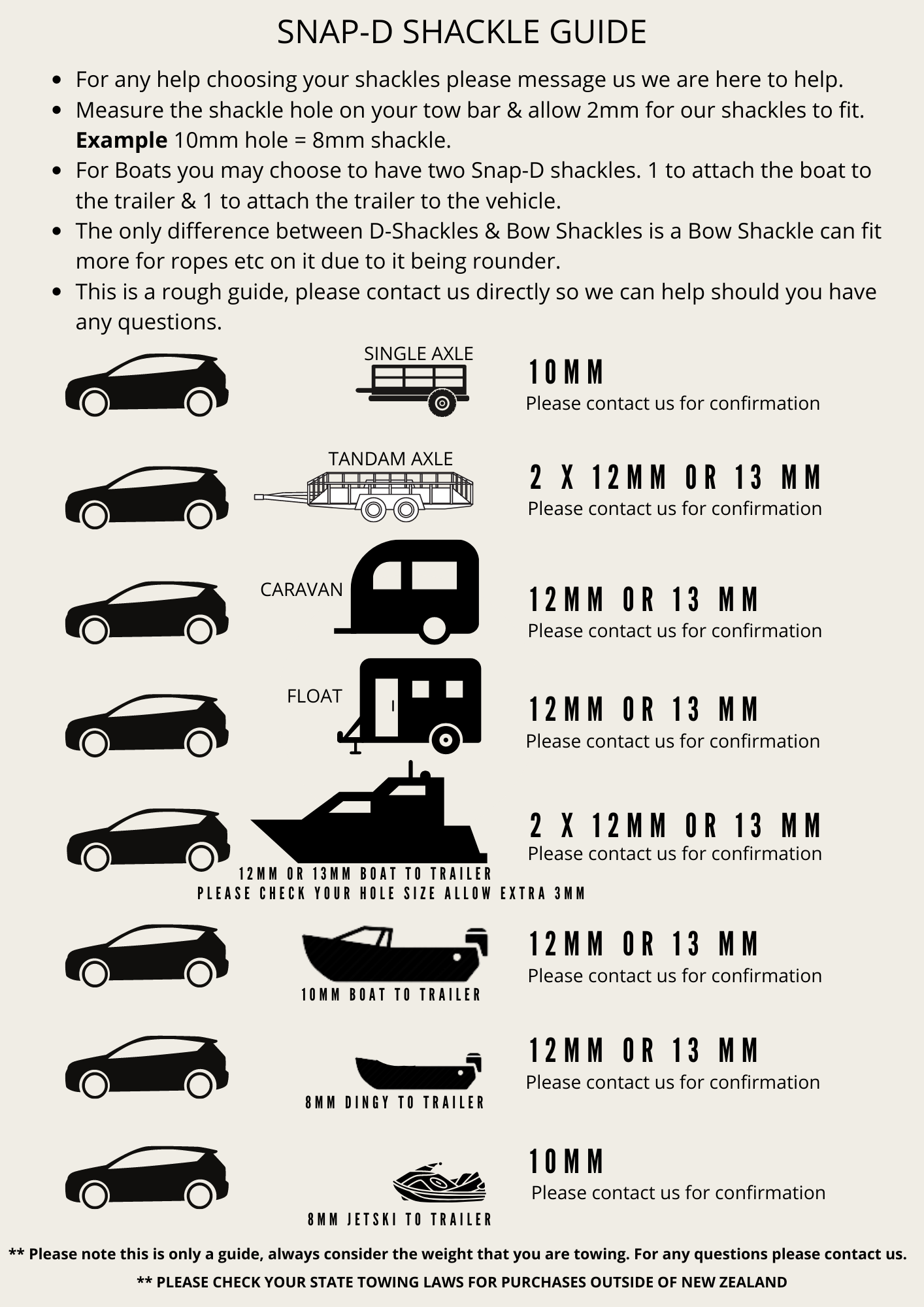
Not sure which size you need? It’s not just about the weight; it’s about making sure the pin actually fits through the holes on your towbar.
- Jet Skis & Small Tinnies: Usually an 8mm or 10mm shackle is plenty.
- Standard Trailers & Small Boats: Look at the 10mm or 12mm D Shackles.
- Caravans & Large Boats (up to 3.5t): You’ll likely want the 12mm or 13mm Bow Shackles.
- Heavy Duty (up to 4.5t): Our 17mm D Shackle is the big gun for the heavy haulers.
Always check the diameter of the hole in your towbar before ordering. There’s nothing more annoying than getting your shiny new shackles only to find the pin is a fraction too thick for the hole!
A Final Word on Safety: TOWING ONLY
I need to be very clear on this point because it’s a matter of life and death. Snap-D shackles are designed and rated strictly for towing.
They are perfect for your caravan, your boat, your horse float, or your trade trailer. However, they are NOT for recovery.
4WD recovery involves massive, unpredictable kinetic forces that are completely different from the constant, rolling load of towing. If you’re bogged in the bull dust and need a snatch recovery or a winch out, use dedicated recovery gear. Don't risk your life or your rig by using a towing shackle for a recovery job.
Is Your Setup Legal?
At the end of the day, being legal is about being safe. If you’re using unrated hardware store shackles, you’re not just risking a fine; you’re risking your trailer and the safety of everyone else on the road.
Invest in a set of rated, certified shackles that are actually designed for the job. Our range of D and Bow shackles are built to handle the toughest Aussie conditions while making your life at the hitch easier and faster.
Stop messing around with rusty screw pins. Join the half-turn revolution and tow with peace of mind.
If you’ve got questions about which shackle is right for your specific trailer, or if you're unsure about the ratings, give us a shout. We’re here to help you get it right.
Stay safe on the roads, legends.
Cheers,
Paul Bennett
Managing Director, Snap-D Australia


Follow