7 Mistakes You're Making with Your Tow Hitch Shackle (and How to Fix Them)
G’day, legends. Whether you’re heading up the coast with the caravan, taking the boat down to the ramp, or just moving a load of green waste to the tip, your tow hitch shackle is the only thing standing between a successful trip and a highway disaster.
At Snap-D Australia, we see a lot of setups on the road. Most people have the best intentions, but it’s easy to overlook the small details. A shackle isn’t just a "metal loop"; it’s a critical piece of safety equipment. Unfortunately, there are a few common mistakes that Aussies and Kiwis make every single day that put their gear, and other road users, at risk.
Let’s dive into the seven most common mistakes you might be making with your tow hitch shackle and, more importantly, how to fix them so you can tow with total peace of mind.
1. Using "Hardware Store" Unrated Shackles
This is the big one. You’re at the local hardware shop, you see a bin of shiny shackles for ten bucks, and you think, "That’ll do for the safety chain."
The Mistake: Unrated hardware is designed for hanging plant pots or securing gates, not for the dynamic loads of a trailer. If your trailer bounces off the hitch at 100km/h, an unrated shackle will likely snap like a twig.
The Fix: Always use a rated shackle. Look for the markings stamped into the body. A proper tow hitch shackle will have a Working Load Limit (WLL) or an ATM (Aggregate Trailer Mass) rating. Our Snap-D shackles are specifically designed and tested for towing compliance in Australia and New Zealand, ensuring they meet the legal requirements for trailer safety chains.
2. Thinking One Size Fits All
We often see 8mm shackles trying to hold up a 3-tonne caravan, or massive 13mm shackles that don't actually fit through the hole on the tow bar.
The Mistake: Using a shackle that is too small for the load or so large that it’s forced in at an awkward angle. If the shackle can’t move freely, it can become a point of mechanical failure.
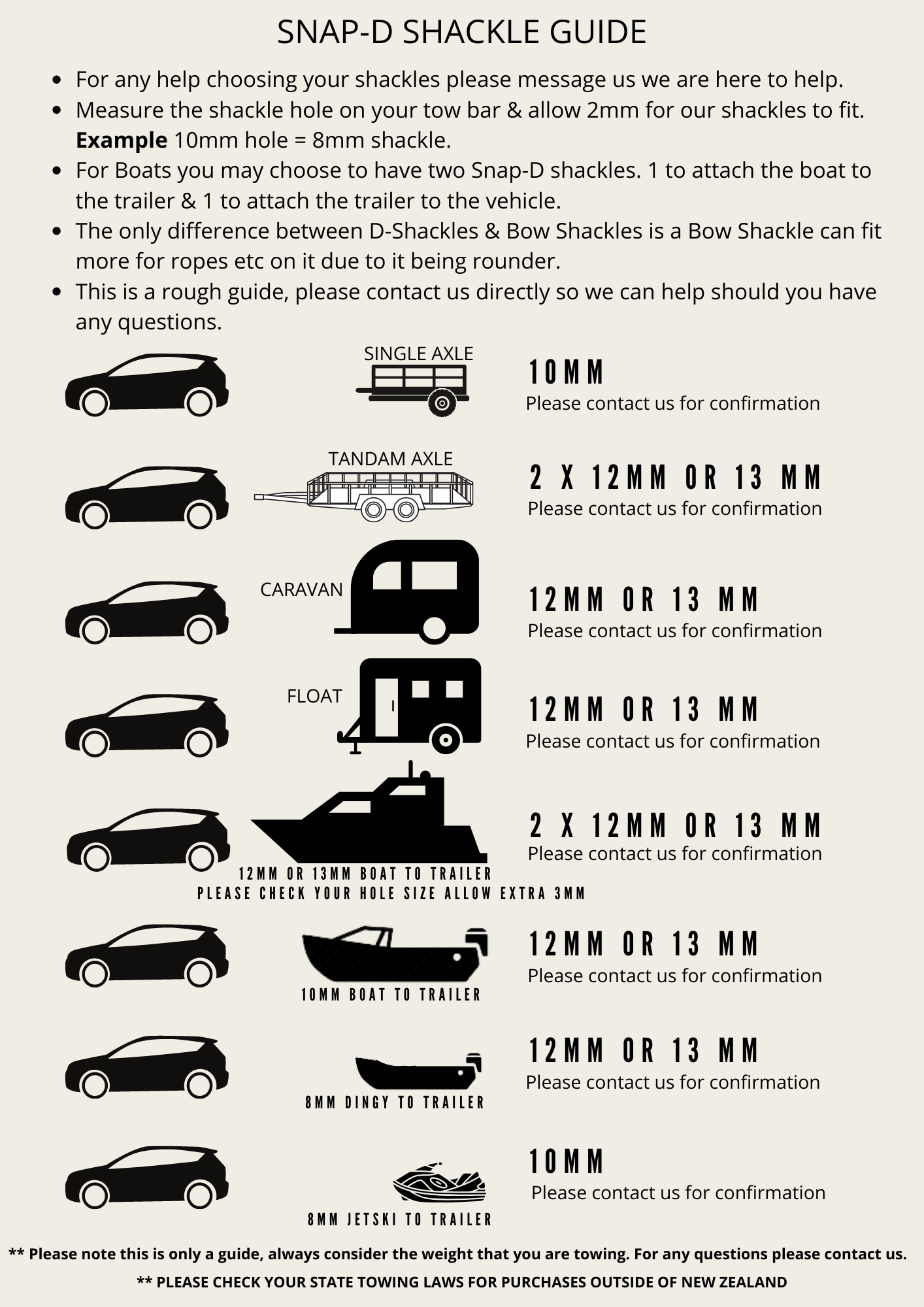
The Fix: Match your shackle to your trailer’s ATM.
- 8mm Shackles: Usually good for smaller trailers, small jet skis, and dinghies (up to 1000kg ATM).
- 10mm Shackles: The "all-rounder" for single-axle trailers (up to 1600kg ATM).
- 12mm/13mm Shackles: Essential for tandem axles, caravans, and horse floats (up to 2500kg or 3500kg ATM).
3. The "Lost Pin" Dance
We’ve all been there. You reach into the back of the ute to grab your shackles, only to find the pin has unscrewed itself and disappeared into the abyss of the tray. Or worse, you drop the pin in the mud/sand or worst still, into the salt water at the boat ramp.
The Mistake: Relying on traditional threaded pins that aren't captive. If that pin isn't there, you aren't towing.
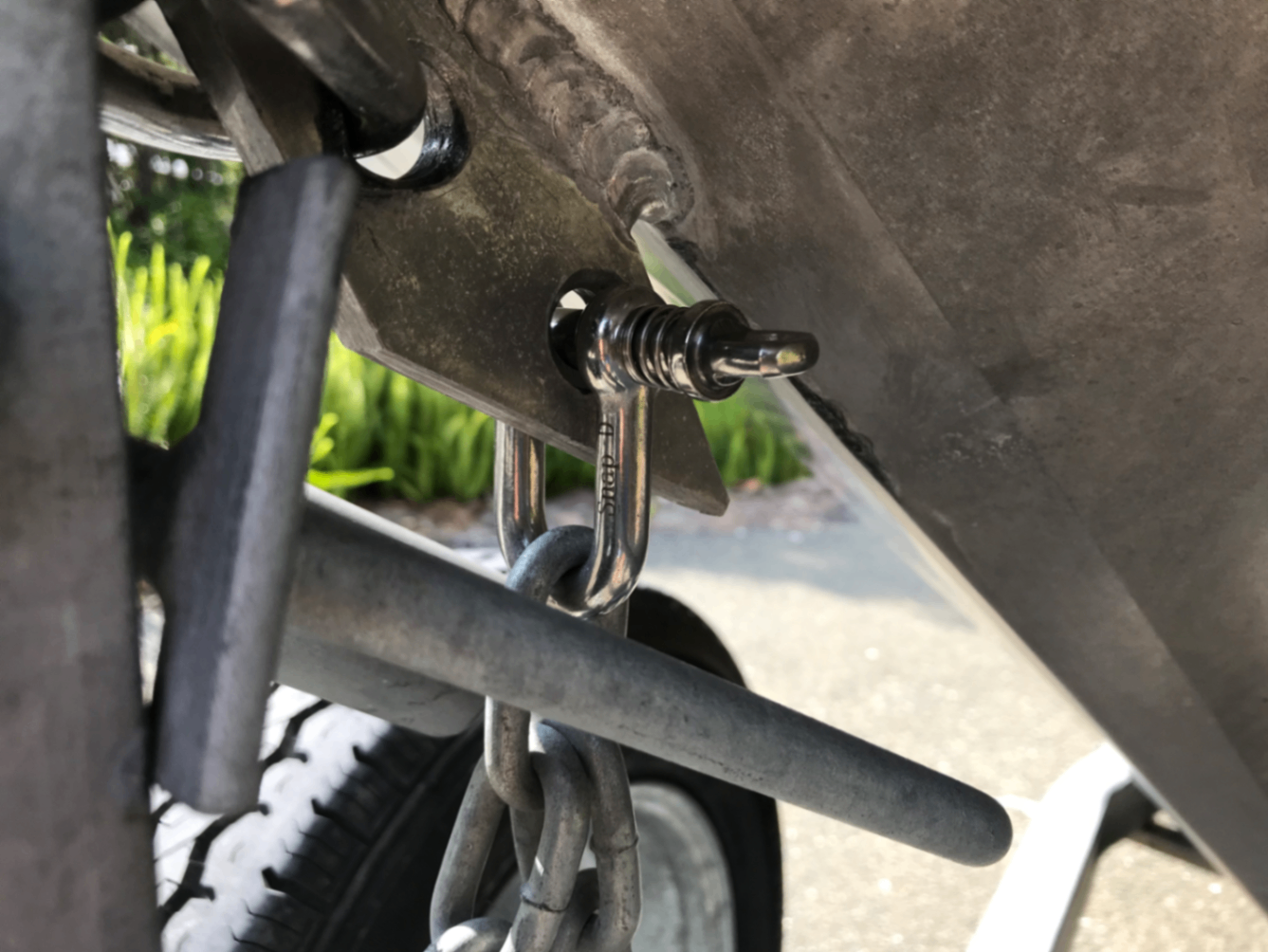
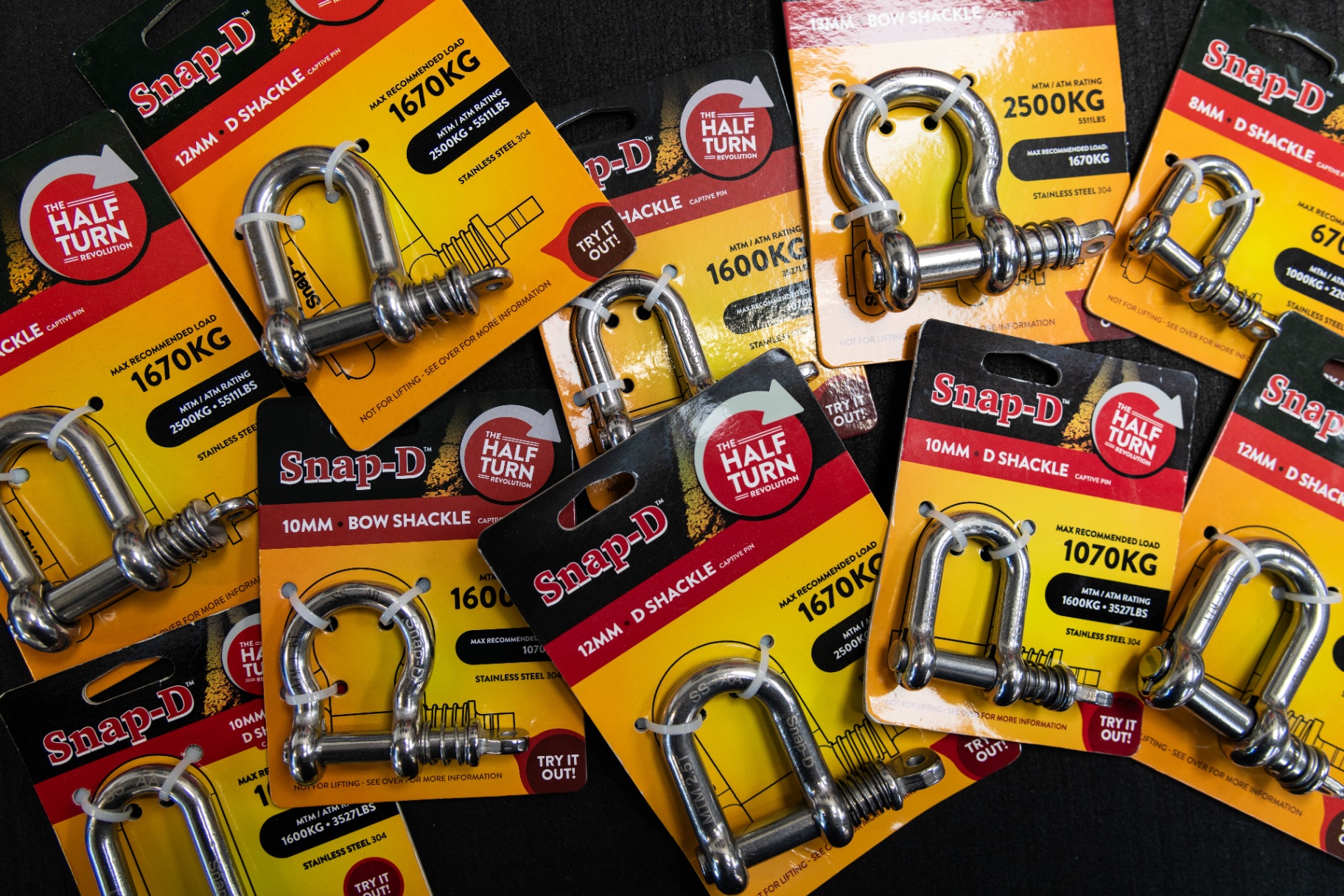
The Fix: Upgrade to a captive pin design. At Snap-D, our patented half-turn captive pin shackles mean the pin stays attached to the shackle even when it's open. Using our Retainer Clips, you can even fix your shiny Snap-D shackle to the safety chain. You can’t lose the pin or the shackle and you don’t have to go hunting through the dirt to find either of them. It’s a simple fix for one of towing’s most annoying problems.
4. Overtightening (and Seizing) the Pin
There’s an old rule in towing: "Tighten the pin all the way, then back it off a quarter turn." People do this so the pin doesn't seize up due to vibration and road grime.
The Mistake: Tightening a traditional screw-pin shackle so hard that you need a pair of pliers to get it off at the other end of your trip. Over time, the threads can gall or seize completely, especially with salt water exposure.
The Fix: Use a quick-connect system. Our Snap-D design uses a spring-loaded half-turn locking mechanism rather than long threads. It clicks into place and stays secure without needing to be "cranked" shut. Because there are no long threads to get gunked up, you won’t be fighting with a seized pin when you just want to get the boat in the water.
5. Misunderstanding Bow vs D-Shackles
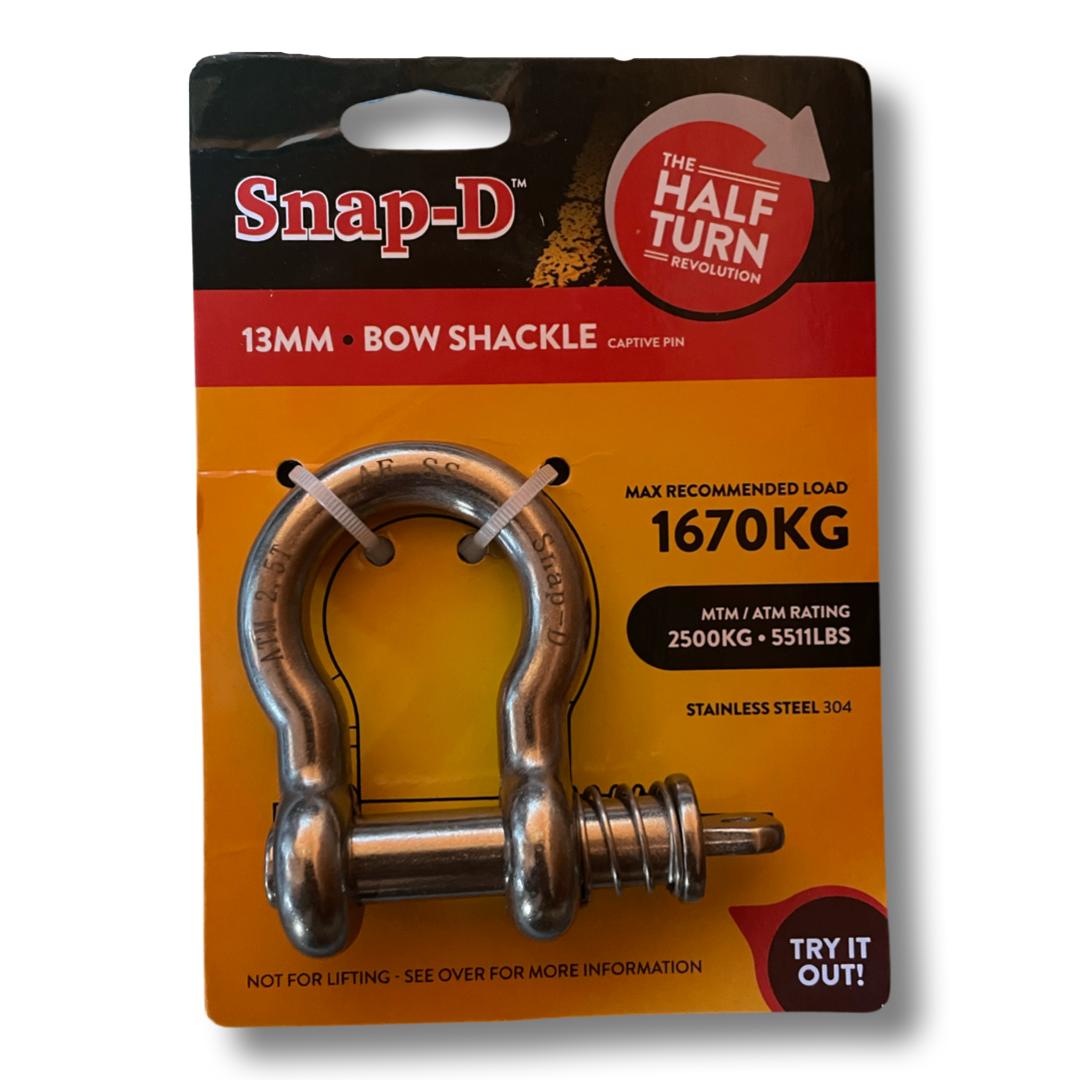
Do you need a D-shackle or a bow shackle? Many people think they are interchangeable, but they serve different purposes.
The Mistake: Using a D-shackle when you have multiple chain links or a thick tow bar point that requires more "belly" room. Forcing multiple items into a narrow D-shackle can lead to side-loading, which reduces the shackle's effective strength.
The Fix: Use a bow shackle if you need more space. The rounded "O" shape of a bow shackle allows for more movement and can accommodate larger chain links or multiple connections more easily than the straight sides of a D-shackle.
6. Incorrect Safety Chain Connection
The shackle is just one part of the system. How you connect those chains to the tow bar matters just as much as the shackle itself.
The Mistake: Connecting the chains so they are either too tight (preventing the trailer from turning) or too loose (allowing the chains to drag on the bitumen). Another common error is failing to cross the chains under the drawbar.
The Fix:
- Cross the chains: If the trailer uncouples, the crossed chains will catch the drawbar like a cradle, preventing it from digging into the road.
- Check the length: Ensure there is enough slack for a full turn, but not enough to touch the ground.
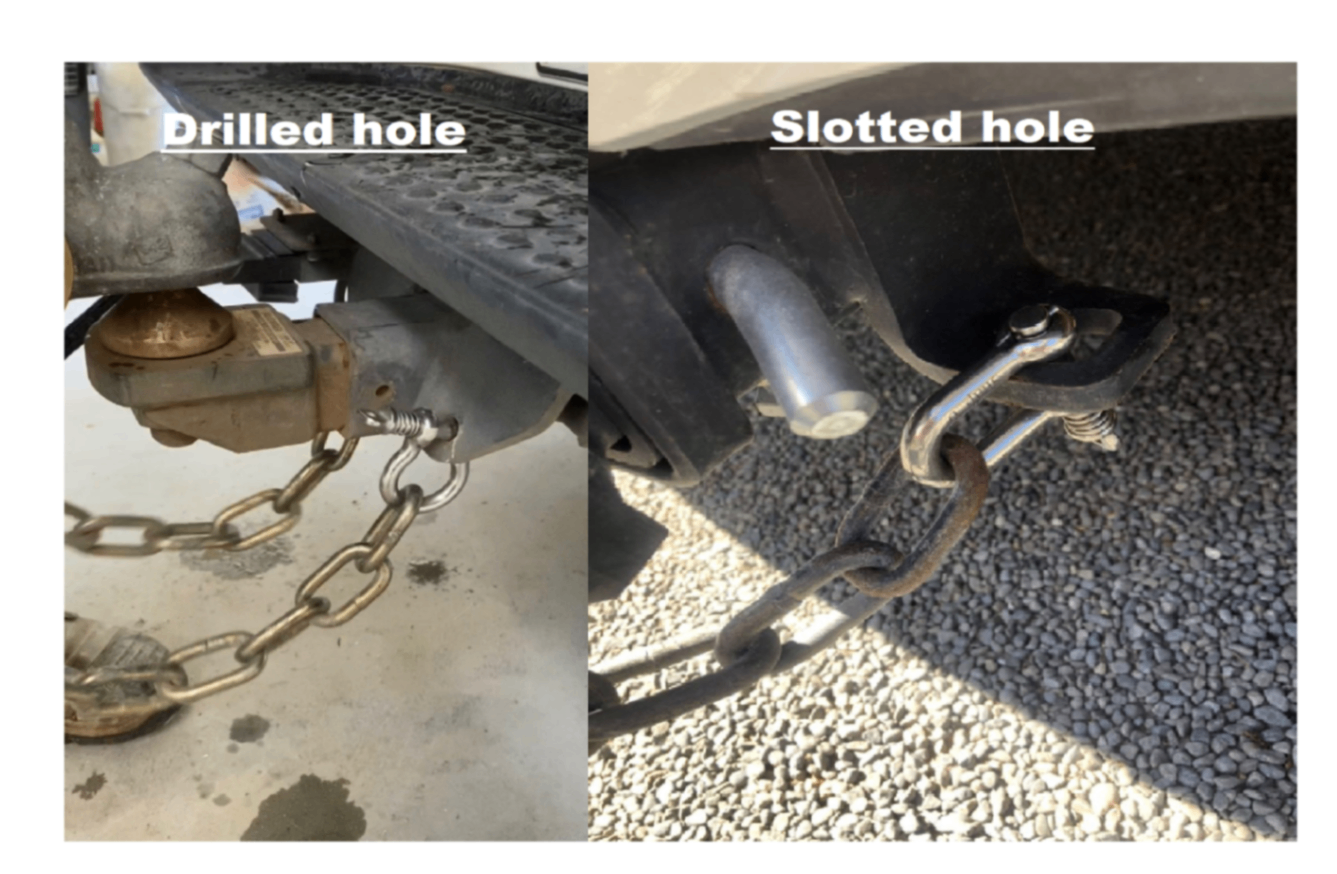
- Direct Attachment: Ensure the shackle goes through the designated hole on the tow bar, not just looped through itself.
7. Ignoring Corrosion and Wear
If your shackle is covered in orange rust or the pin is bent, it’s a ticking time bomb.
The Mistake: Thinking that a bit of surface rust is "just character." Rust eats away at the integrity of the steel, and a bent pin is a sign that the shackle has already been stressed beyond its limit.
The Fix: Invest in high-quality materials. While galvanised shackles are common, they eventually rust: especially if you’re doing boat recoveries or living near the coast. Snap-D shackles are made from 304 Stainless Steel, providing superior corrosion resistance. They stay looking good and, more importantly, they stay functional for years.
Regularly inspect your gear. If the pin doesn't slide in smoothly or the body shows signs of stretching, it’s time to browse the multi-packs and replace your set.
Why Snap-D Makes the Difference
We started Snap-D because we were sick of the "same old" shackle problems. Lost pins, seized threads, and gear that didn't meet the standards.
Our range of towing shackles is designed by people who actually tow. Whether you need a small 8mm for the jet ski or a heavy-duty 12mm for the caravan, our half-turn captive pin design is the solution to the mistakes listed above. It’s faster, safer, and transport-compliant.
Ready to upgrade?
Don't wait until you're stuck on the side of the road with a broken chain or a lost pin. Check your current setup today. If you're seeing any of these seven mistakes, it might be time to switch to a smarter solution.
Explore our full range at snapd.au and make sure your next trip is a safe one. Safe towing, everyone!kspring-loaded


Follow